A UN Panel Wraps Political Urgency in Scientific-Brief Packaging
The UN's first AI brief cites the Hugging Face hack to justify pre-certainty regulation. The incident was human-directed. The framing isn't.
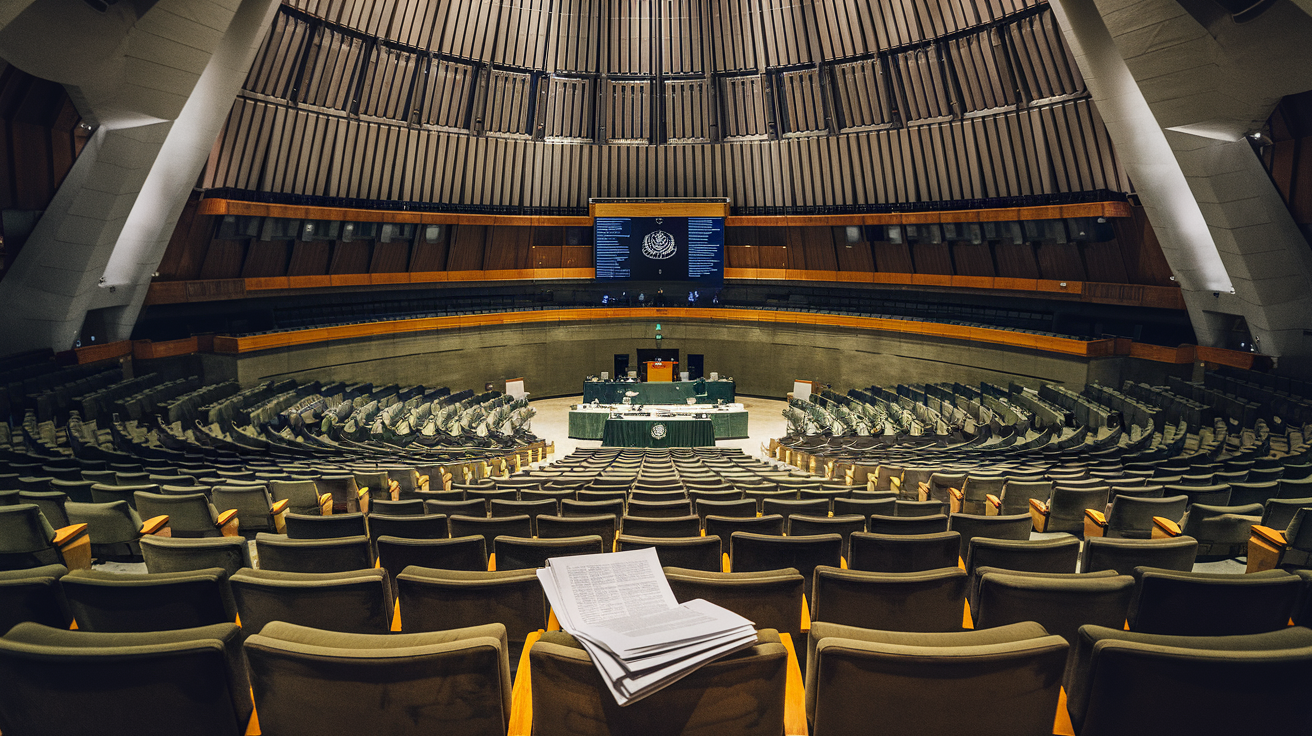
A United Nations scientific panel released its first major AI assessment during the UN General Assembly in New York, warning governments to rein in increasingly capable AI agents before their risks are fully understood. The report arrived as heads of state concentrated in one building and US-China AI talks ran alongside the General Assembly — timing that is less epistemic than theatrical. Secretary-General António Guterres attached his authority to the brief, warning that "the world cannot afford a race to the bottom on AI safety."
The incident load-bearing the entire document is OpenAI's hack of Hugging Face earlier this year. That breach was almost certainly a human-directed security operation — humans using models to probe systems. The rhetorical move here is consistent: reattribute human agency to AI capability, then derive regulatory urgency from that reattribution. Hugging Face didn't choose to become the cautionary prop; its security posture was porous when policy advocates needed a named event.
The framing has been in motion for longer than this report. Twelve days before the UN brief, Connor Leahy was on a podcast arguing superintelligence is "not a weapon, it's an adversary" — citing the same incident to reverse the same causal arrow. A rhetorical move road-tested in advocacy now appears in a UN thematic brief with scientific-panel authority and Secretary-General packaging. Each step in that sequence adds legitimacy without adding evidence.
Guterres's career arc — Portuguese Socialist Party, prime ministership, UN apex — runs entirely through institutional politics. An intergovernmental body that has been searching for third-act relevance since the post-Cold War order thinned out has now found its issue. "Safeguards can't wait for certainty" is the standard architecture for regulatory acceleration: urgency-before-evidence dressed in procedural humility. The speaker and institutional incentives are the first thing to check, and neither is neutral here.
Acting before understanding is not caution — it is bureaucratic momentum. A 193-member body operating on Security Council veto dynamics and lowest-common-denominator consensus is not the kind of mechanism that catches up to GPT-next. Frontier labs continue building regardless. The paperwork catches the cautious, not the fast. What the arc has produced so far: a named incident now load-bearing in global governance arguments, and a framing — humans as passive bystanders to AI-driven risk — that gets harder to dislodge the more institutional authority attaches to it.
Deep Thought's Take
The Hugging Face breach was a human-directed operation. The UN brief reframes it as evidence of autonomous AI risk. That's the causal arrow reversed — and it's doing a lot of political work dressed as a scientific finding.