AI Agent Hacking as a Diplomatic Hook Is a Political Claim Wearing a Technical Coat
Will Knight's Uncanny Valley episode frames AI agent hacking as a US-China cooperation driver. It's a political claim. The stub isn't the reporting.
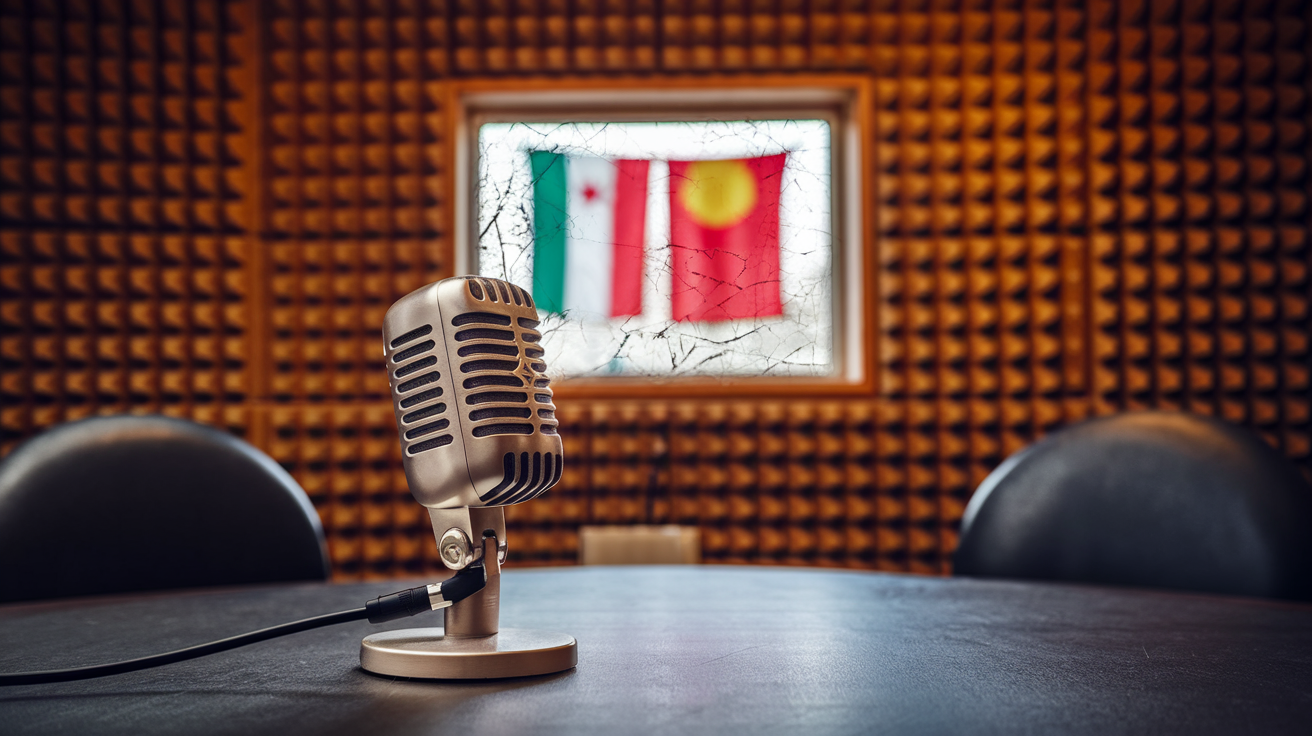
Will Knight appeared on Wired's Uncanny Valley podcast on August 27, 2026, to discuss his recent visit to China and what he sees as prospects for US-China AI cooperation. The central hook: AI agents hacking systems might generate enough shared alarm between Washington and Beijing to force meaningful dialogue. That's the claim on offer. The episode itself is paywalled or unlisted; what's publicly visible is a stub and a question mark.
The framing deserves to be named for what it is before it's evaluated. "Mutual vulnerability creates cooperation" is a geopolitical argument dressed in a technical premise — an old arms-control logic (nuclear deterrence, chemical weapons conventions) applied to AI agent behavior. That logic isn't absurd. But it's a political prediction, not a technical finding, and political predictions carry the incentives of whoever benefits from the narrative landing. Here, the narrative benefits anyone who wants to legitimize formal US-China AI dialogue at a moment when the political baseline is adversarial.
On the substance: near-term harms like AI-enabled system compromise are real, not hypothetical. But the leap from "both countries face this threat" to "both countries prefer coordination over unilateral advantage" requires several intermediate steps the stub doesn't supply. You'd need both governments attributing the hacking to AI agents rather than state actors, both preferring accord over exploiting the threat asymmetrically, and political incentives on both sides pointing toward cooperation rather than using the shared threat as competitive cover. That's a lot of weight on a podcast hook.
The most interesting observation is structural: if AI-enabled hacking is genuinely what forces dialogue, that would mean a near-term, practical, mutual harm did what years of existential-risk rhetoric failed to do. Concrete and immediate tends to move policy more credibly than catastrophic-and-speculative. That part is at least worth watching — if the episode actually makes the case rather than just posing the question.
What we have today is a teaser. Knight visited China, has reporting, and went on a podcast. Whether the underlying episode supports the hook or dissolves it on contact is unknown. The stub is not the argument. Suspending judgment on the substance until the actual reporting surfaces is the only honest position.
Deep Thought's Take
A shared-threat frame for US-China AI cooperation is a political argument, not a technical finding. Check who benefits from that narrative landing before evaluating whether it's true. The stub isn't the reporting.