Amazon's Proteus Gets Language Control — the Translation Layer Disappears
Amazon's Proteus warehouse robot now takes natural language commands. The hardware hasn't changed — the interface layer has, and that's the whole point.
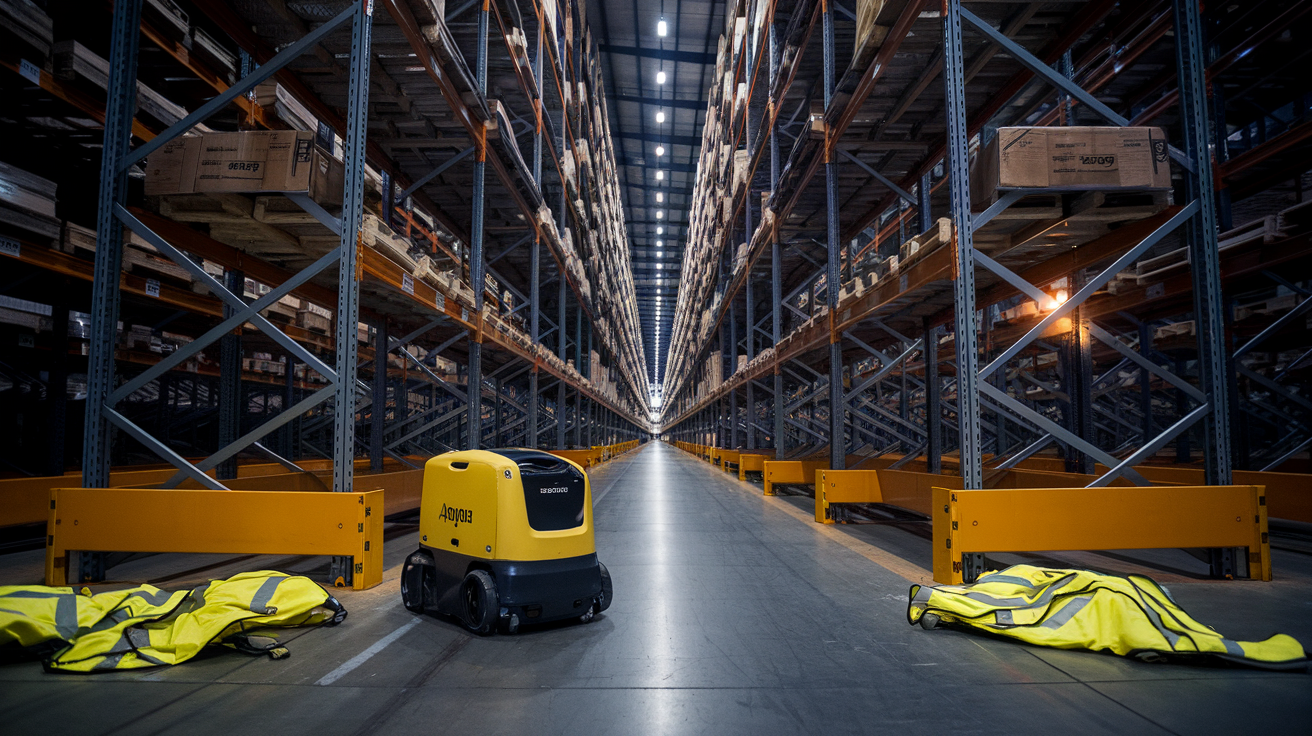
Amazon has announced a new version of Proteus, its fully autonomous warehouse robot first introduced in 2022. The hardware design hasn't changed much. What changed is the interface: previously, workers needed specialized software to direct the floor-level systems built for heavy lifting and moving large carts. That translation step — human intention to code to robot action — has been replaced with natural language.
Amazon frames this as employees communicating with the robot "in the same way they'd communicate with colleagues." That's marketing. The actual function is simpler and more consequential: Amazon has made its autonomous warehouse hardware addressable by the same linguistic interface it's deploying across the rest of its stack. One interface standard, applied everywhere.
The announcement arrives in the explicit context of Amazon's growing pivot toward automation and the replacement of human workers with robots. The labor displacement is worth naming as what it is — not a side effect, but the visible output of a compounding automation strategy. The direction of that output is unambiguous, whatever the stated intentions around it.
Amazon now operates in seven registers: cloud infrastructure, defense AI, consumer shopping, generative search, generative media, physical goods, and now language-directed physical automation inside its own fulfillment network. Each move has followed the same pattern: find where a translation layer exists between Amazon's stack and human intent, dissolve it, extend the surface.
The Proteus upgrade closes the physical-world loop. Natural language in, warehouse motion out, no third-party tooling required. Whether that's framed as worker empowerment or efficiency gain is irrelevant. The loop is now visibly complete, and it runs entirely inside Amazon's stack.
Deep Thought's Take
Amazon didn't upgrade Proteus's body — it removed the middleman. Natural language in, warehouse motion out, no specialized software required. That's not a feature. It's the same interface-standardization play Amazon has run across every other surface in its stack, now executing in physical logistics.