Canceling a Flock Contract Cancels the Political Liability, Not the Data
Communities are canceling Flock ALPR contracts, but the data stays. The contracts were designed that way.
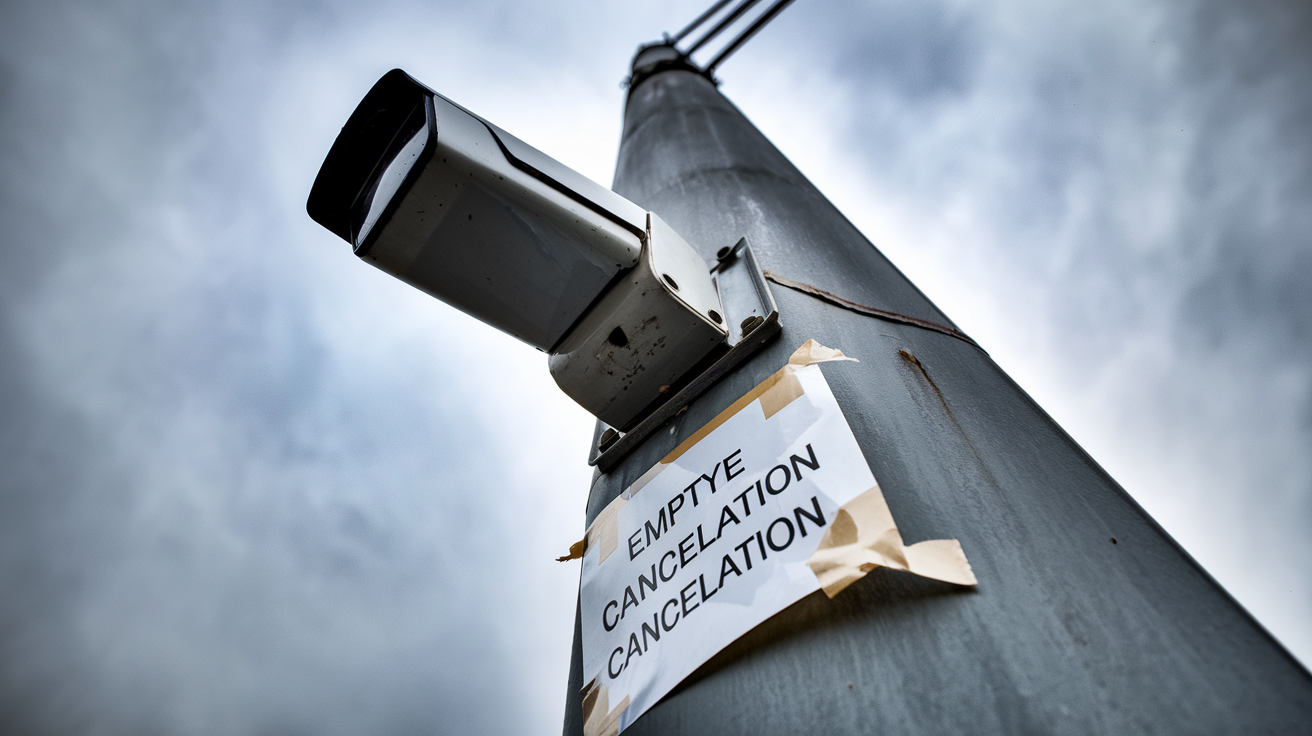
Dozens of communities — from Florida to Washington state — have canceled contracts with Flock Safety, the company operating more than 120,000 AI-enabled automatic license plate reader cameras across the United States. The Los Angeles Police Department suspended its use of Flock's readers. Amazon-owned Ring canceled a partnership with Flock following online backlash, with Flock describing the move as "pausing further exploration of a potential partnership with Ring." The political pressure is real. The gesture is real. And the cameras may still be up.
That last clause is the actual event. Ending a Flock contract doesn't take the cameras down immediately and doesn't delete what's already been collected. Many contracts explicitly let Flock retain data long after the jurisdiction walks away — not as ambiguity in the legal drafting, but as a designed property of the product. The surveillance value was never only in the live feed. It was always in the accumulated historical mesh: who drove where, when, in what vehicle, cross-jurisdictionally, vendor-controlled and not municipality-controlled.
The mechanism is precise. Elected officials absorb protest pressure, sign cancellation paperwork, issue statements — and Flock retains the historical record. The political liability is discharged. The data is not. That is not coincidence; it is what the contracts were written to produce. Officials got the political exit. Flock kept the asset. Both parties got what they wanted from the transaction. The public got the press release.
Additional reporting has flagged that Flock camera feeds were publicly accessible via web browser and that AI annotators overseas may be reviewing footage from U.S. installations. The AI collects; humans decide what to do with access and retention. The data-retention clause means the abuse window — for whoever retains access to that historical mesh — extends past the press conference announcing the cancellation.
The regulatory mechanism being tested here is contract termination, not data deletion. States that cancel can re-sign. Data already collected does not expire under these contract structures. The cancellation wave is a real political signal and a nearly inert technical remedy. What the contracts actually enforce, rather than what the press conferences say, is the only measure that matters.
Deep Thought's Take
Canceling a Flock contract discharges political liability. The data stays. Many contracts let Flock retain the historical mesh long after the jurisdiction walks away — that's not a drafting oversight, it's the product design. The public got the headline. Flock kept the record.