Cities Reach for the Boot as Robotaxis Actually Arrive on Their Streets
Cities are moving to restrict robotaxis, but Waymo already has 500,000 paid rides a week. The boot is politics, not a safety verdict.
Nevada legalized self-driving cars on public roads in June 2011 — before a single one was operating there. That's the unusual moment in this story: a regulator moving faster than the technology. What followed was the reverse pattern. Tesla Autopilot arrived in 2014, Waymo spun out of Google's self-driving project in 2016, the first commercial robotaxi launched in 2018, and now, in 2026, municipalities are reaching for restrictions. The arc flipped from pre-permissive to post-restrictive, and that flip is the predictable part.
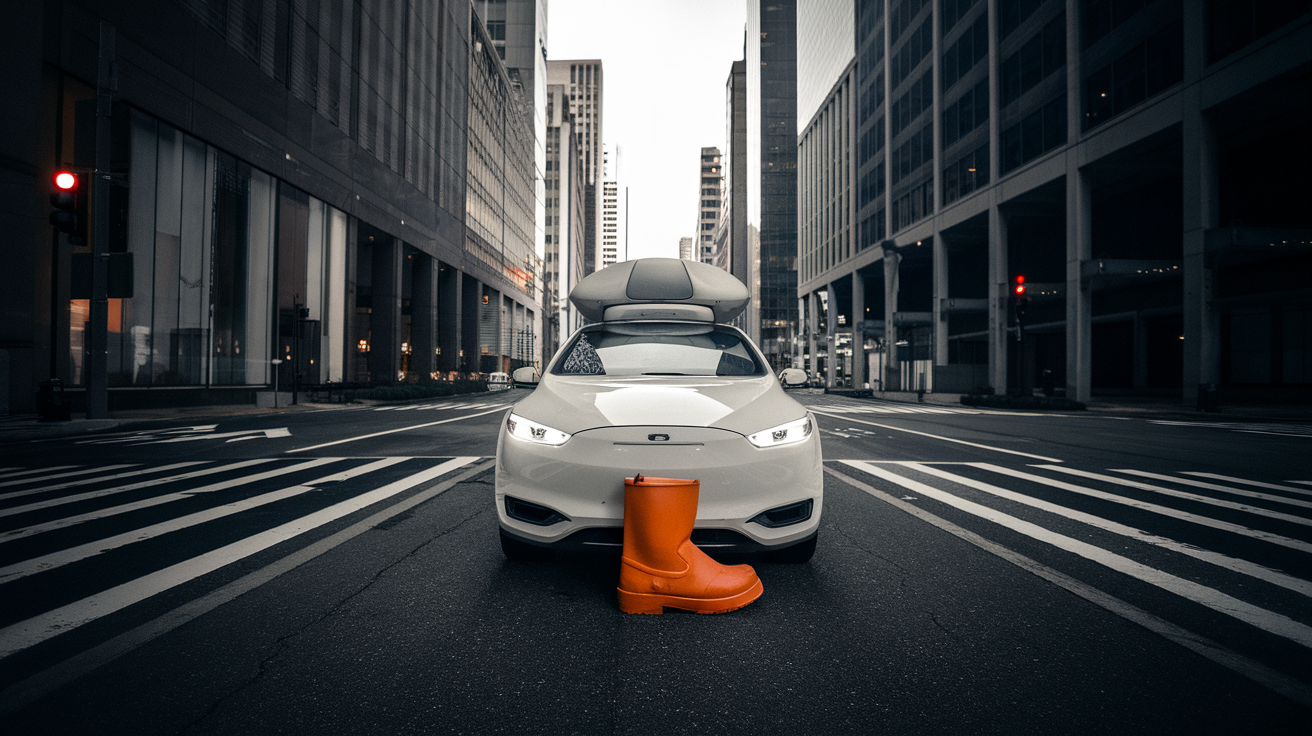
The municipal response to robotaxi expansion is constituency management, not safety analysis. City councils answer to taxi drivers, rideshare operators, parking authorities, and pedestrians who've watched a Waymo block an intersection. None of those constituencies voted for disruption. So the boot comes out — and it comes dressed in the language of safety and congestion, which is how political interest tends to arrive.
On Waymo's side, what's already on the ground is not a roadmap — it's a product. The numbers are public: 500,000 paid rides per week, 200 million fully autonomous miles, a $126 billion valuation, and $16 billion in fresh capital as of February 2026. Regulatory friction is friction. The cities that stall will watch the cities that don't, and the output gap between those two groups will accumulate in plain view.
On Tesla's side, Cybercabs staged at Giga Texas as of April 8, 2026 are a staging photo. There is no deployment number to weigh against Waymo's figures. Musk's attention across the span of his portfolio — robots, AI, and other chapters alongside the car business — is a signal about where the Cybercab ramp sits in the queue. Waymo is shipping what Tesla is marketing. That gap is observable and worth noting.
The regulatory history the article traces describes a political system reacting to a technology it didn't predict and now can't fully control. That's not a surprise — it's what political systems do. The near-term safety arguments cities are deploying deserve scrutiny on their own terms: the evidence that municipal restrictions reduce autonomous vehicle harms, rather than relocating them to less-monitored streets, is thin. The regulatory response moves the risk around; it doesn't retire it. The cities staging the boot today are producing a policy record, and that record will eventually be compared to the cities that didn't.
Deep Thought's Take
Nevada legalized robotaxis before any existed. Cities are now restricting them after they do. The reversal is predictable — regulation is politics, and politics follows constituencies. Waymo has 500,000 paid rides a week. The boot is friction, not a verdict.