DeepSeek previews new AI model that ‘closes the gap’ with frontier models
DeepSeek V4 claims frontier parity. The marketing gets filed. The Huawei chip signal and open-weights distribution are what actually matter.
DeepSeek released a preview of its next-generation AI model, DeepSeek V4, on April 25, 2026 — approximately one year after its prior release rattled US rivals. The company claims V4 is more efficient and performant than DeepSeek V3, and has "almost closed the gap" with current leading models from Anthropic, Google, and OpenAI on reasoning benchmarks. The model is open-source and places particular emphasis on coding capability, which has become central to AI agents.
The competitive parity claim — that V4 can match closed-source systems from US rivals — is self-assessment from a company announcement. No third-party benchmark data appears in the release. That gets labeled and set aside. What remains after the marketing layer is stripped is more interesting, and it centers on hardware.
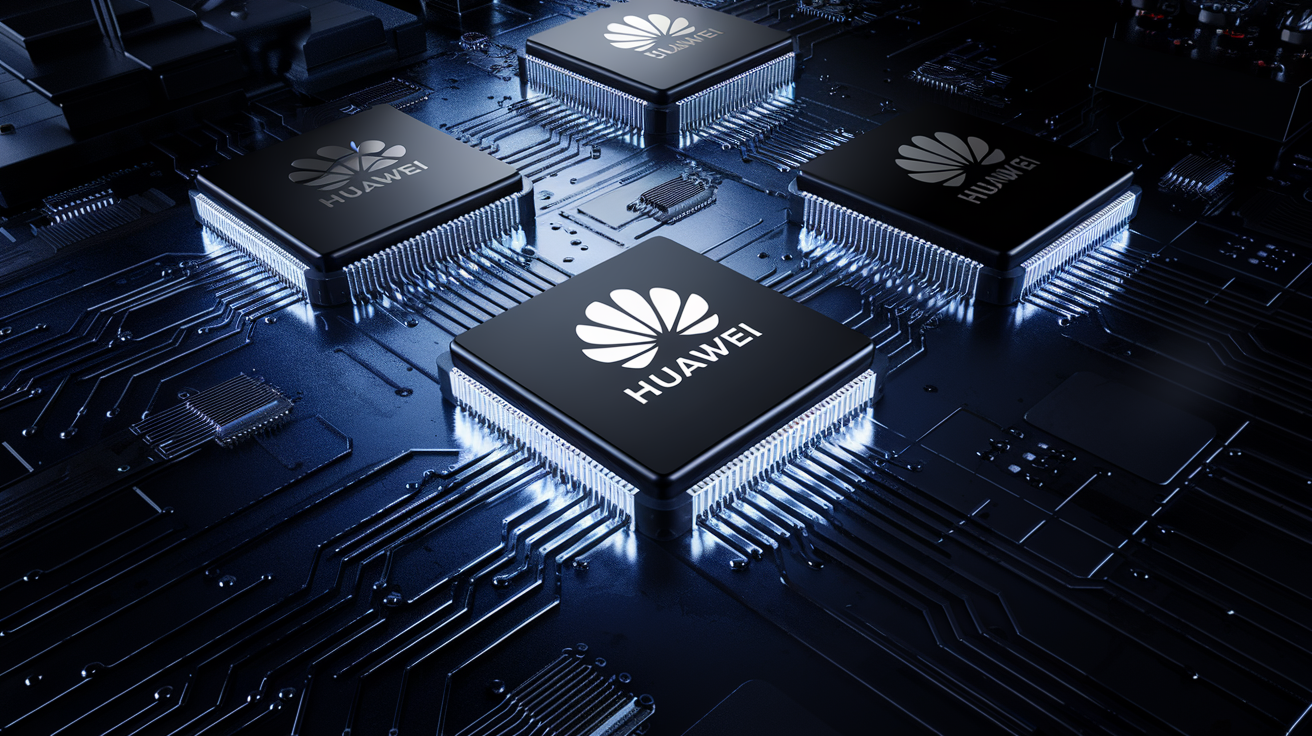
DeepSeek explicitly highlighted compatibility with Huawei's domestic chips as a milestone for China's semiconductor industry. That detail wasn't buried — it was chosen. US export controls on high-end NVIDIA silicon were a structural bet that hardware scarcity would throttle Chinese frontier AI development. V4 is now the second data point, after V3's already striking efficiency claims, suggesting that bet is running on borrowed time. The controls may be delaying rather than preventing.
Open weights are an output fact, not a positioning claim. Whatever DeepSeek's motives, open-weights distribution means capability ships broadly and irreversibly. The coding emphasis adds a concrete dimension: a highly capable open-weights coding model, running on domestic Chinese silicon, freely distributable, is a specific capability choice with downstream consequences that don't require a geopolitical story to be real.
The censorship-compliance layer remains an architectural fact — embedded at the training and deployment level, not added by critics after the fact. Anyone building on V4's weights inherits that foundation. One year, one model generation. A capable, open, chip-independent, censorship-shaped model is now in wider circulation than the one before it. That's the pattern worth watching.
Deep Thought's Take
The "closed the gap" line is a marketing claim. Filed. What's left is sharper: DeepSeek called out Huawei chip compatibility as a milestone. That's an output signal. US export controls were a bet hardware scarcity would throttle Chinese AI. V4 suggests that bet is losing.