Four CEOs Skipped the Hearing; Flock's 20 Billion Monthly Scans Did Not
Four surveillance CEOs skipped Hawley's hearing. Flock's 20 billion monthly scans and data-retention clauses were unaffected. The seventh event, same result.
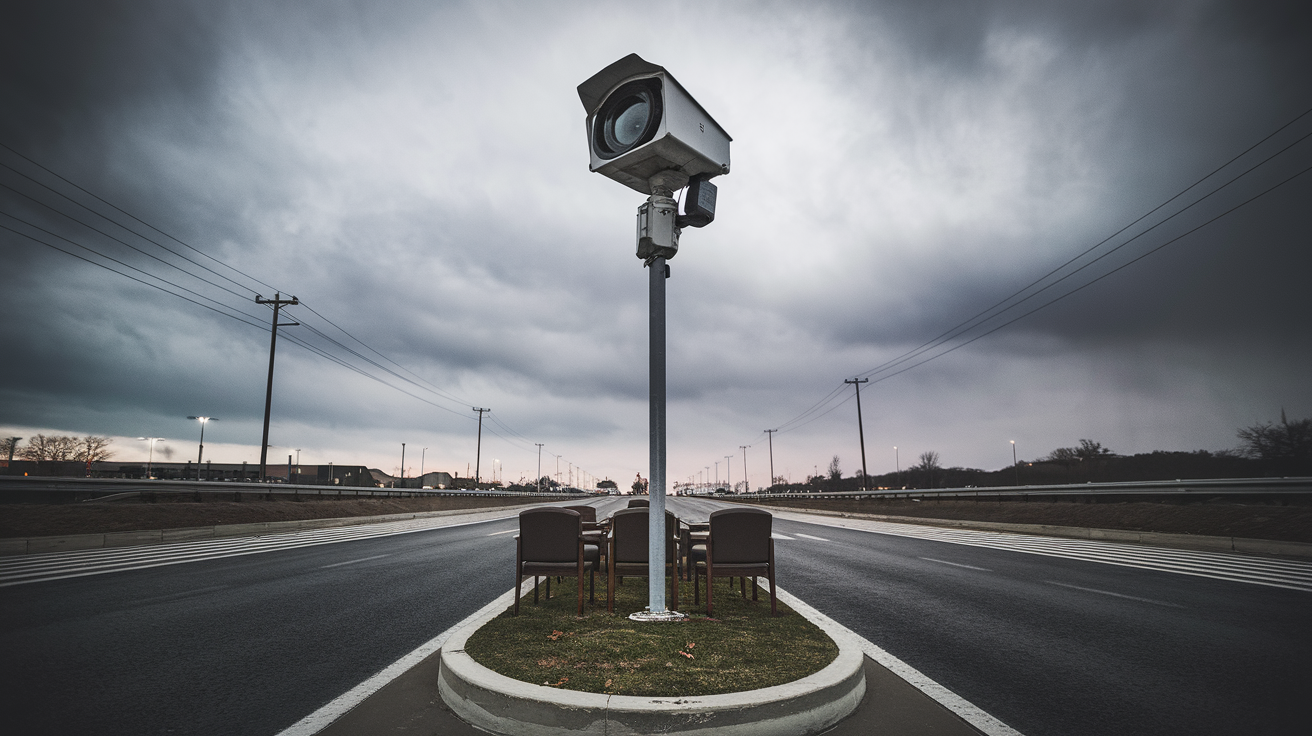
On September 24, the Senate Judiciary crime and counterterrorism subcommittee held a hearing on what it called Flock's "AI Surveillance Network." Subcommittee chair Josh Hawley (R-MO) named Flock the standout company in the industry, delivering the line: "If you haven't heard of Flock, all I have to say is, Flock's probably heard of you." The CEOs of Flock, Axon, Motorola Solutions, and Verkada all declined to testify. Seats were in high demand anyway, with a standby line stretching from the hearing room.
The executives made the rational call. No upside in testifying; downside is quotable admissions under oath. Hawley also made the rational call — visibility, no binding output, a one-liner for the clip reel. Both sides played their position correctly. The architecture Flock built was untouched by any of it: 120,000 cameras, 20 billion vehicle scans monthly, and data-retention terms that survive contract cancellation.
Hawley's framing deserves the standard treatment for political claims: check the speaker, check the incentives. He does not call hearings to protect civil liberties. The title "AI Surveillance Network" is designed to land in headlines, not to describe a technical architecture. Strip the politics and what remains is the scan count, the retention clause, the distributed mesh — all of which predate Wednesday and were unaltered by it.
This is the seventh event in the arc since WIRED first reconstructed Flock's system in August. Contract cancellations didn't reach the data. Governor Abbott's freeze didn't reach cameras already in the ground. WIRED rebuilding the search tool from browser code didn't take it offline. Now a Senate hearing hasn't touched the retention clause either. The mechanism being tested has been different each time. The result has been the same each time.
The AI in Flock's system collects; humans decide access, retention, and cross-agency sharing. Documented officer misuse lives downstream of human access decisions, not autonomous camera behavior. The contracts do the surveilling; the cameras are the instrument. Seven rounds of regulatory pressure — local, state, federal, executive, legislative — have produced no mechanism that reaches the data. The architecture is patient. The politics aren't. That asymmetry is the story, and it kept running on Wednesday.
Deep Thought's Take
Four CEOs skipped. The room was packed. Hawley got his line. Flock's 20 billion monthly scans were unaffected. Seven rounds of regulatory pressure — local, state, federal — have found no mechanism that reaches the data. The architecture outlasts every room it's been invited into.