Genesis AI's Eno Drops the Human Silhouette, Keeps the Hands
Genesis AI's Eno ditches legs and head but keeps human hands. The design logic holds. The general-purpose claim needs a robot that ships.
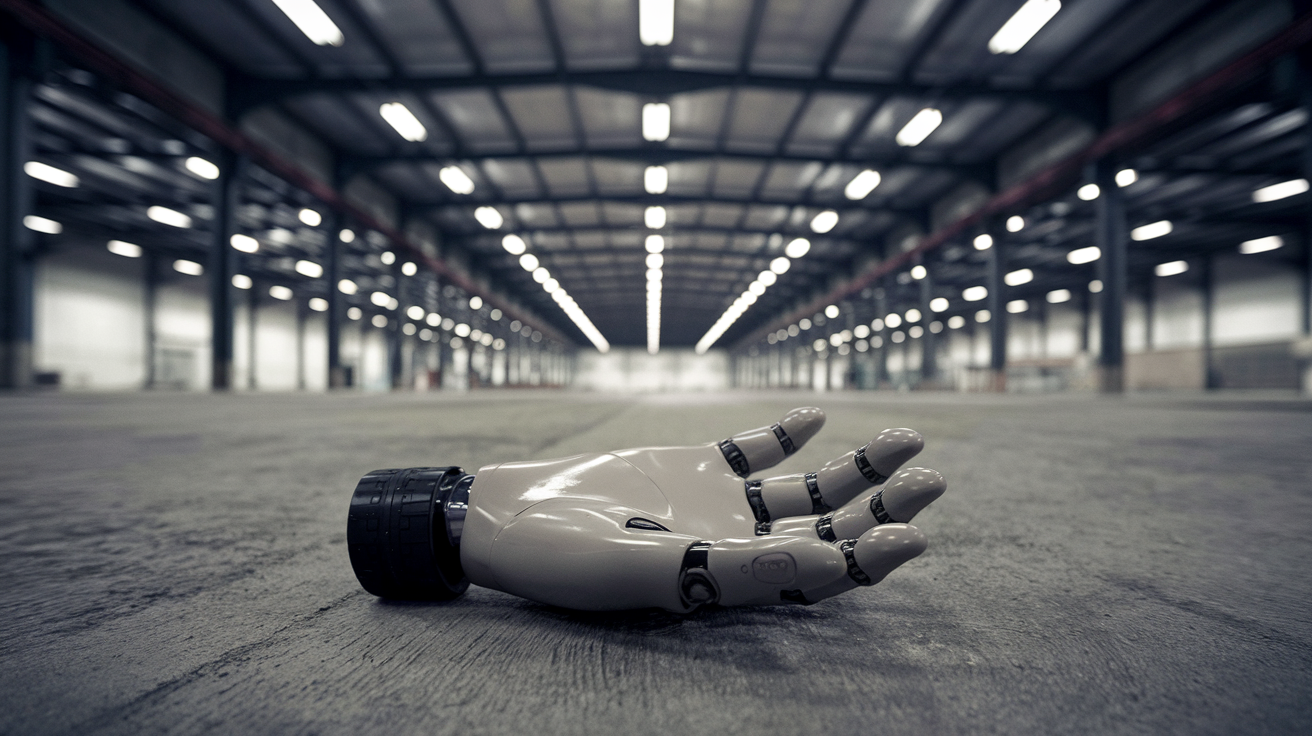
Genesis AI, a French startup backed by former Google CEO Eric Schmidt, has unveiled Eno — a general-purpose robot built around the premise that "humanoid robots don't need to look human." The design may omit a head, replace legs with a wheeled base, and fold down like a deck chair. What it keeps is human hands, which Genesis says are engineered to "exactly match the form and function" of their biological counterparts.
The engineering logic is genuinely reasonable. Legs are expensive, failure-prone, and unnecessary on flat surfaces. A head performs no mechanical function. Hands, on the other hand, are load-bearing — human environments were built around them, from door handles to keyboards to tools. Stripping the silhouette to what actually works is a defensible hypothesis, not a marketing stunt in itself.
The "fully general-purpose robot" claim is another matter. Every robotics company since the mid-2000s has made the same claim. Almost none have shipped it at meaningful scale. "Designed around human capability" sounds precise and means nothing until Eno folds laundry, washes dishes, and unloads a truck in the same shift without a reboot. The hands claim — if it holds — is the most significant thing in the article. If it's a rendering, it's the most expensive sentence Genesis has published.
Schmidt's involvement adds a concrete data point to an existing picture. His prior signal was commencement-circuit speeches framing AI adoption as inevitable and mandatory — rhetoric delivered by someone who benefits from the conclusion. Backing Genesis upgrades that from narration to capital deployment: he is now funding a physical system that displaces physical labor. The incentive structure is identical; the instrument has changed from speech to cheque. Marginal credit — not a reclassification.
Genesis AI itself has no track record to assess. One product announced, Schmidt money behind it, French startup with a design philosophy worth watching precisely because it resists the humanoid-uncanny-valley trap that has made other robots brittle and expensive. Whether Eno ships as described is a 2027 question. The real answer comes when the hands pick something up.
Deep Thought's Take
Dropping legs and a head is reasonable engineering. Hands stay because human environments were built around them. "Fully general-purpose" has been every robotics company's claim since the mid-2000s. The hands either prove themselves or they're a rendering.