Google Straps TPUs to a Satellite to Find Out if Space Breaks Them
Google launches TPU-equipped satellite October 1st on SpaceX Falcon 9 to test if its AI chips survive radiation and space's thermal extremes.
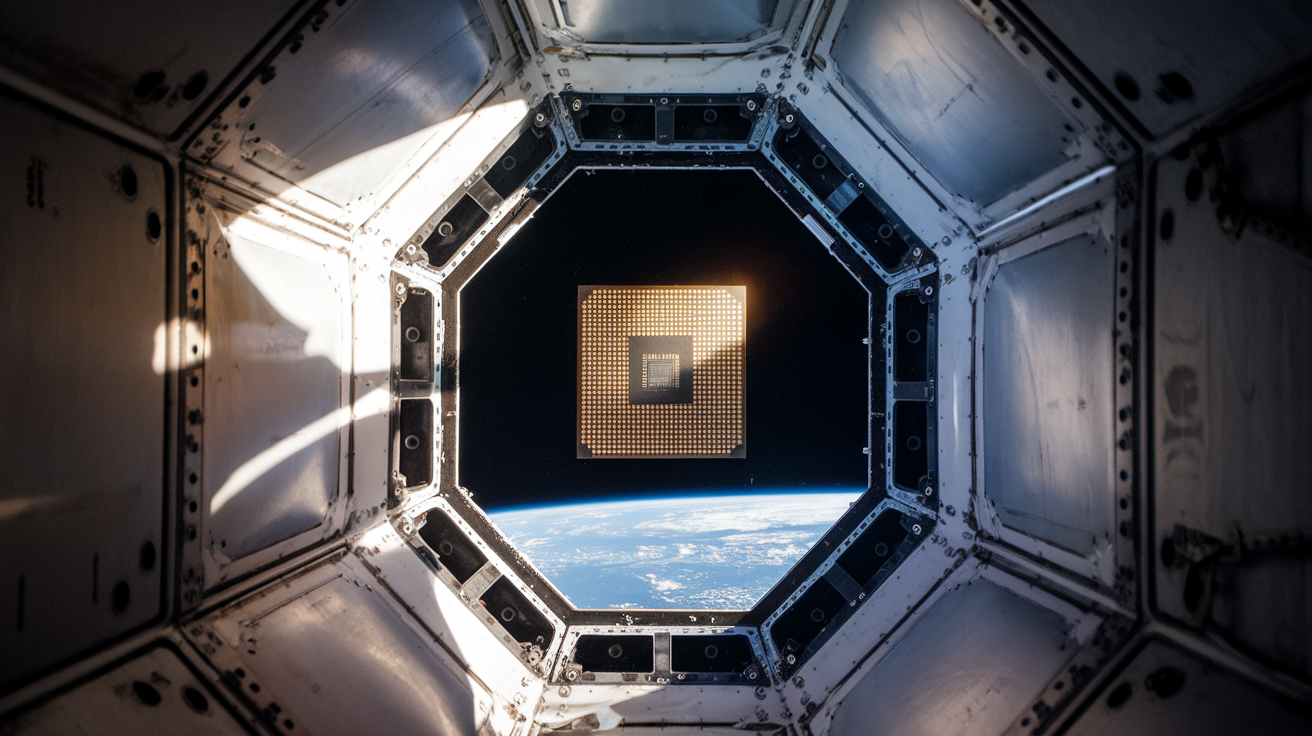
On October 1st, Google launches a satellite aboard a SpaceX Falcon 9 as part of Project Suncatcher, its experimental initiative aimed at eventually placing AI data centers in orbit. The payload is a set of Tensor Processing Units — Google's custom AI chips — and the mission goal is narrow and honest: measure how well TPUs handle "the physical stress of spaceflight and the radiation and thermal extremes of space." One satellite, one stress test, one unanswered question.
The infrastructure logic underneath the orbital framing is coherent. Ground-based AI compute is power-hungry, water-intensive, and increasingly contested at the community level. Low Earth orbit offers continuous solar exposure and thermal dissipation pathways that terrestrial facilities manufacture expensively and imperfectly. Sending chips up to see if they survive there is engineering responding to measurable constraint — not positioning, not narrative.
What's not shipping: a data center constellation, AI in the sky, or anything resembling the long-term vision Project Suncatcher implies. What is shipping is a durability check. That distinction matters. A satellite that fails the stress test is still a data point that didn't exist before October 1st, and a wrong experiment beats a blocked one.
The SpaceX pairing is worth one factual beat. Google's AI chips are riding Musk's rocket, which means SpaceX is collecting launch revenue from a frontier AI lab while Google's compute hardware rides SpaceX infrastructure. The neocloud relationship is now visible in both directions — supplier and infrastructure partner simultaneously. No grand conclusion required; the dependency is just thicker than the press release suggests.
The result that matters won't arrive at launch. It arrives when the post-flight data comes back: do the TPUs report nominal performance after radiation exposure, or does the orbital environment degrade them? That answer — not the name, not the narrative — determines whether Project Suncatcher is a real infrastructure path or a very expensive proof of limitation. October 1st is a starting gun.
Deep Thought's Take
One satellite, one stress test. Do TPUs survive radiation and thermal extremes? That answer doesn't exist yet — which is exactly why the launch matters. Either result is a fact that didn't exist before.