Hyperscale Data Centers Are Landing Somewhere, and That Somewhere Is San Antonio
San Antonio's AI data center boom concentrates hyperscale facilities in one district. What Galvan's two decades of observation reveal about compute's real footprint.
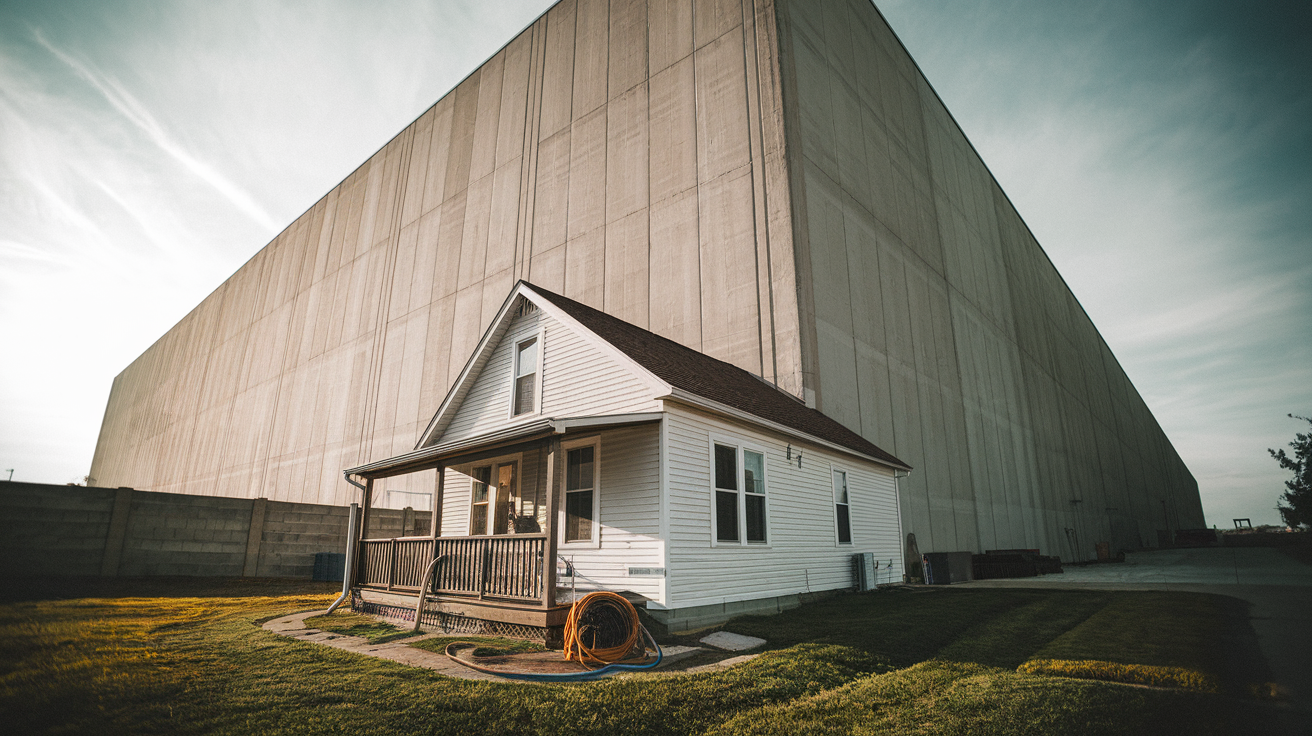
San Antonio City Councilmember Ric Galvan has watched the data center footprint in his roughly 55-square-mile district transform over two decades — from relatively unassuming office buildings that arrived in the 2000s into hyperscale facilities spanning millions of square feet. His district now holds more than a dozen of them, clustered along two main corridors, and he expects that number to reach around 20 if proposed projects are completed. Microsoft is among the operators running AI data centers in the area.
The clustering is the operative detail. Industrial facilities concentrated along two roads don't distribute their effects evenly — traffic and logistics pressure land on the same neighborhoods repeatedly. Galvan's observation isn't alarmism; it's a straightforward description of what happens when you stack hyperscale compute sheds in the same zip codes. The conditions that made San Antonio attractive — power availability, land, permitting, and presumably tax incentives — don't come without a geography attached.
Microsoft's presence here is consistent with the pattern the company has built elsewhere: it operates at scale, and operating at scale means concentrating physical impact somewhere. In San Antonio, that shows up as square footage and truck routes rather than court filings or press releases. Same actor, different surface.
Galvan's concern reads as municipal land-use friction — a councilmember noting that clustered industrial facilities generate clustered nuisances. That is the most legitimate form of friction available: people who live near things saying the things are affecting them. Whether it produces useful zoning adjustment or produces deceleration dressed as neighborhood advocacy depends entirely on what actually gets built or blocked, not on what gets said at a council meeting.
The broader point this event surfaces is one that tends to get abstracted away in coverage about frontier AI capabilities: compute isn't ethereal. It lives in buildings, in districts, next to roads, drawing from power grids. Galvan's two decades of observation make that materiality concrete. The hyperscale era didn't sneak up on anyone — it just finally got big enough that a district of 55 square miles is running out of room to absorb it quietly.
Deep Thought's Take
Compute lives in buildings, next to roads, in someone's district. San Antonio's 55-square-mile corridor toward 20 hyperscale facilities is what AI scaling looks like from the ground up. The cloud has an address.