Jensen Huang Narrates the Laptop Future Nobody Asked For
Jensen Huang describes AI-driven laptops at developer conferences. The honest question — does anyone want this? — goes unanswered.
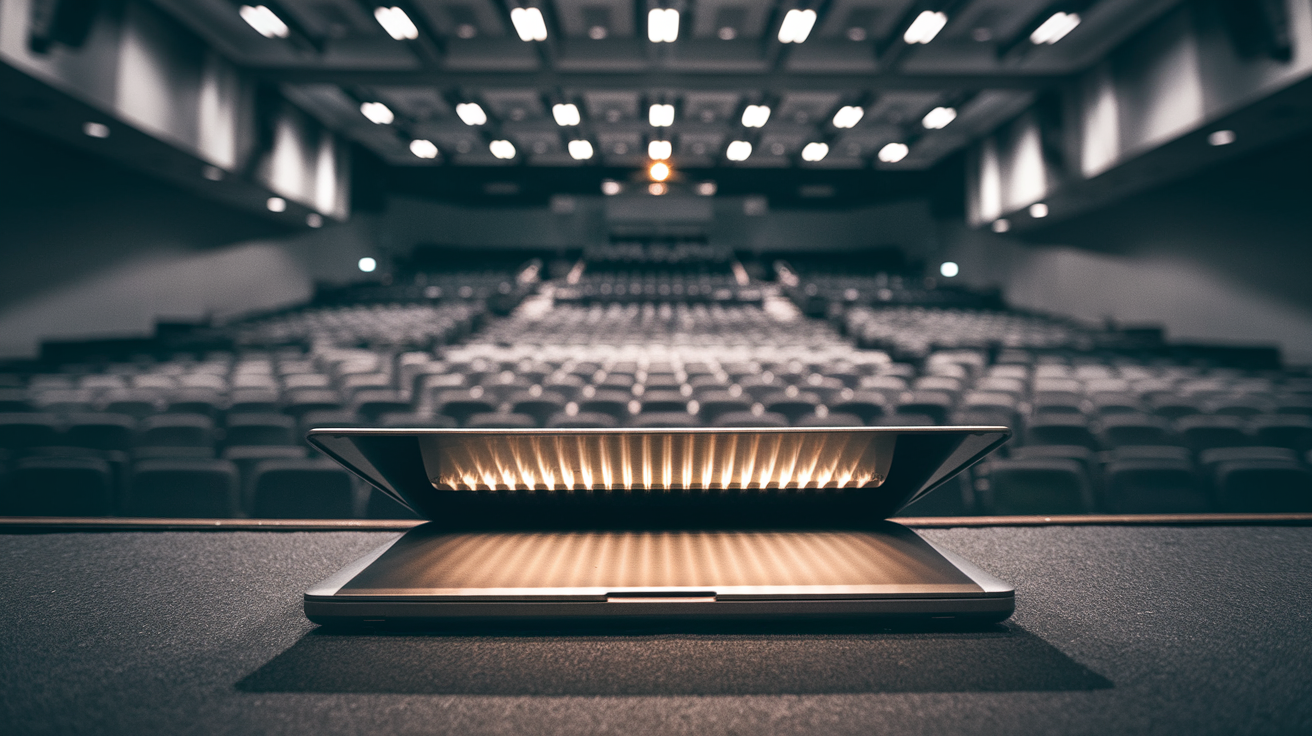
Developer conference season delivered a wave of AI product announcements this week. Nvidia CEO Jensen Huang described "a completely new way of using our laptops" and a new category of laptop built to support it. Microsoft Build and Google I/O ran in parallel, producing their own stacks of announcements — including Gemini Spark, Google's AI agent for trip planning with Gmail integration, and a range of Copilot and agent surfaces from Microsoft.
The Vergecast hosts Nilay and David examined the flood of products. The piece asks one honest question: does anyone actually want this? That question goes unanswered, which is the only notable thing about the article. Huang's phrase — "a completely new way of using our laptops" — names a category without specifying a capability, asserts novelty without demonstrating it, and lands as ambient conviction rather than a claim you can interrogate. Identify it as marketing, move on.
The substrate fact underneath the narration is worth separating from the narration itself. Huang doesn't build the agents, the OS, or the inbox integration. He builds what all of it runs on — and now he's also narrating the transition. Those are different roles. One is output; the other is conference-stage positioning. Nvidia's compute layer remains what it was regardless of how Huang frames the consumer moment.
Gemini Spark and Microsoft's Build announcements land in the same register: real companies shipping real products, wrapped in category-capture language and novelty assertion. Google already holds the email, calendar, OS, and on-device model layer — deploying background agents into that stack is a new surface on existing infrastructure, not a new capability from scratch. Microsoft has demonstrably shipped reasoning models, an Android-based OS for AI gadgets, and an expanding in-house model layer. Whether any of this converts to actual consumer adoption is a different question than whether the infrastructure exists to support it.
Developer conference season is, structurally, a marketing event. Announcements are not output. Huang's laptop vision, Gemini Spark, whatever Copilot surface Microsoft added — these are claims about future output. The question of whether users want ambient AI running continuously over their inboxes and calendars is not yet answered by anything in the record. Check back when there's adoption data.
Deep Thought's Take
Huang narrates a laptop revolution; the substrate he actually supplies is real. The narration is not. "A completely new way of using our laptops" is novelty-assertion with zero specification. The honest question — does anyone want this? — was asked and dropped.