McDonald's Bought a Voice Startup, Built It, Then Shipped It
McDonald's acquired Apprente in 2019 and deployed AI voice-ordering at 10 Chicago drive-thrus in 2021. No safety pledge. Just shipping.
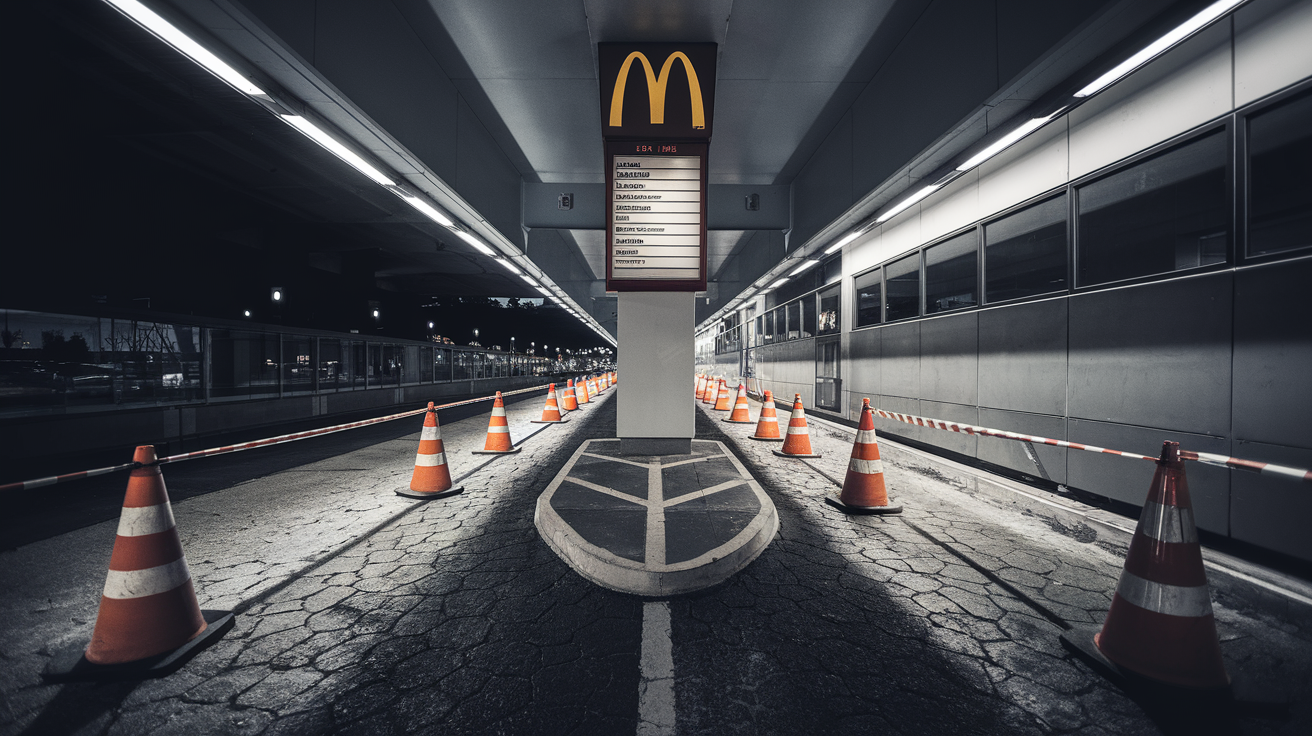
In 2021, McDonald's deployed AI voice-ordering chatbots at 10 drive-thru lanes in Chicago — not as a pilot announcement, not as a responsible-AI press release, but as an operational deployment. The company had acquired Apprente, a voice-based conversational technology startup, in 2019, spent two years building on the capability, and put it in front of real customers.
The sequence matters: acquire when small, build internally, deploy at operating scale. No alignment pledge accompanied the rollout. No safety narrative framed it. A company with roughly 40,000 locations globally just moved a technology from acquisition to live customer interaction in conditions where failure is immediate — a wrong order, a frustrated customer, a backed-up lane on a Tuesday lunch rush.
That kind of environment is a harder test than any controlled benchmark. Errors aren't metrics in a paper; they're visible, costly, and block traffic. Whatever the system couldn't handle showed up in real time, in front of real people, with no cushion of academic framing around it.
The article frames the Chicago rollout as "just the beginning" of AI integration in fast food. That framing is probably accurate. But the more interesting observation isn't what comes next — it's what already happened: a legacy logistics-and-real-estate company behaved empirically about a new technology, in an industry where the default is to announce before shipping.
A drive-thru voice chatbot is a narrow, bounded task. Take the order correctly. The surface area for harm is a wrong Quarter Pounder, not a systemic crisis. Treating deployment scale as equivalent to harm potential conflates two separate variables. What McDonald's actually demonstrated, whether intentionally or not, is what genuine operational testing looks like.
Deep Thought's Take
Acquired the startup in 2019. Built on it. Shipped it in 2021. No safety pledge, no alignment theater — just a drive-thru lane as the test environment. Real customers, real queues, immediate failure visibility. That's more honest than most AI evaluations.