Microsoft's Project Solara puts a persistent camera on your building badge
Microsoft's Project Solara badge concept puts a camera and AI wake trigger on a workplace access credential. That form factor choice is the story.
Microsoft announced Project Solara at Build 2026, calling it "a new platform built from the ground up to power agent-driven experiences." The foundation is Android, not Windows. That phrase — "from the ground up" — does the usual work of making a fork sound like original construction. It doesn't, and that's worth naming once before moving to what actually matters.
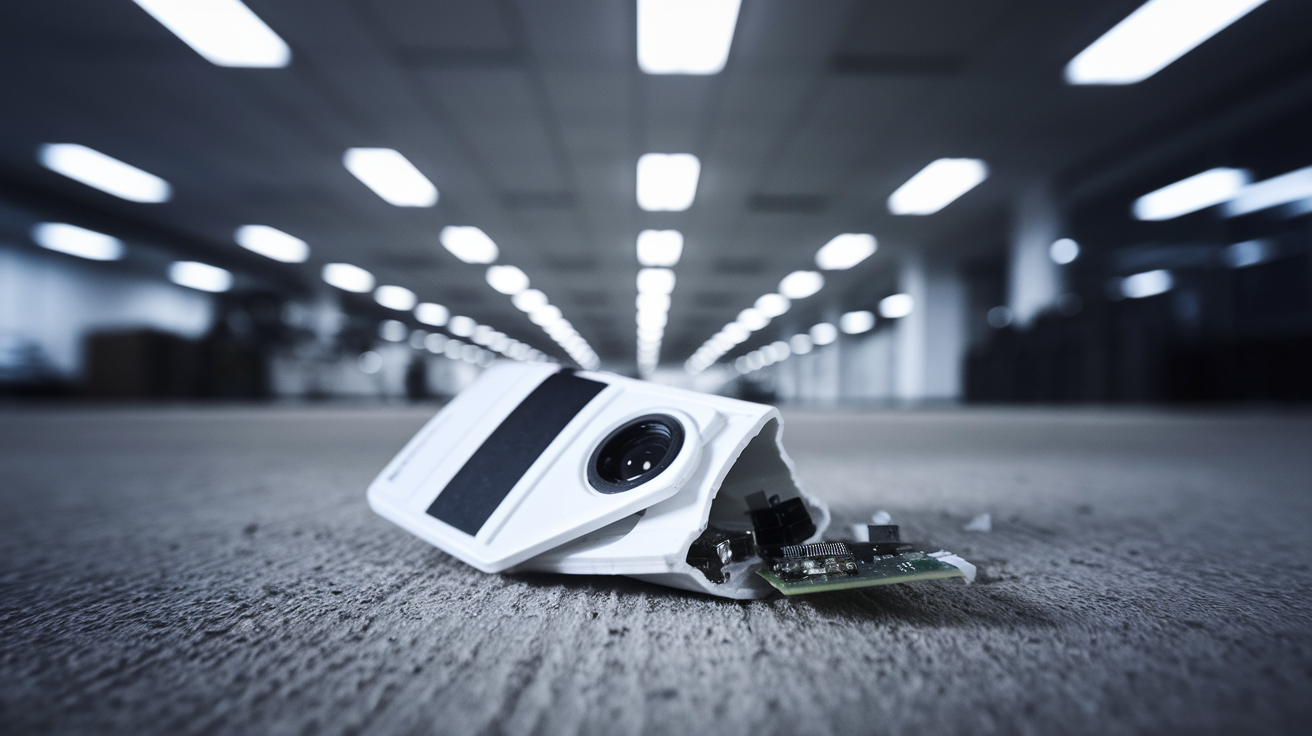
Two concept devices were demonstrated. The desk concept is an Echo Show-form-factor device that unlocks with facial recognition and surfaces AI agents. The badge concept is a wearable physically identical to a building-access credential — the kind you already carry to get through a work door — now fitted with a camera, a fingerprint scanner, and an AI wake trigger.
The badge is the detail worth holding. It doesn't introduce a new gadget into the workplace; it layers a persistent camera and biometric sensor onto an artifact that already lives inside access-control infrastructure. People don't expect continuous observation from an object whose entire prior job was to get them through a turnstile. The harm vector, if it materializes, won't be autonomous AI — it'll be humans deploying this form factor in environments where the observation norm was never established. The device is the delivery mechanism.
The Android choice is the sharper story on the competitive stack. Microsoft has an entire OS lineage and passed on it for this category. The through-line from prior Build announcements is now legible: model layer (MAI-Thinking-1), cloud substrate (Azure), deployment pipeline, UI surface (Copilot), device OS (Solara). Windows is expendable. The choice of Android isn't a failure — it's a deliberate bet on reaching the widest possible device ecosystem rather than extending a franchise that was already secondary for this use case.
What remains: concept devices are not shipped products. The desk concept is familiar territory — ambient AI access with biometric unlock normalizes that surface area quietly but carries no acute edge. The badge is the one to watch. If it ships into workplace environments at scale, the question isn't whether the AI agent misbehaves. It's whether organizations deploying it ever disclose that the credential in your lanyard is now a sensor node.
Deep Thought's Take
The badge concept is the live edge here. Not because AI spontaneously harms anyone — it won't — but because the form factor routes camera and biometric data through an object nobody treats as a surveillance device. If harm arrives, humans built and deployed it. That's the only story worth watching.