Musk v. Altman Ends in Two Hours: A Lawsuit That Produced Nothing
Jury ends Musk v. Altman in two hours on statute of limitations. No damages, no injunction — but the discovery record is now public.
A jury needed two hours to decide Musk v. Altman — finding that Elon Musk's lawsuit against Sam Altman and OpenAI was filed after the statute of limitations had expired. The case was ostensibly about a charitable trust violation: Musk alleged that OpenAI's conversion from a nonprofit to a for-profit entity breached the terms of his donations to the OpenAI Foundation. Microsoft was named as a co-defendant, accused of aiding and abetting, tied to the timing around "the blip" — the period when Altman was briefly removed as CEO and then reinstated.
The legal strategy shifted repeatedly. Originally filed in state court, the suit was withdrawn and refiled in federal court, and at least one charge was dropped before trial began. Liz Lopatto of The Verge, who covered the proceedings, characterized the courtroom as a zoo and the suit's actual purpose as punishing Altman and kneecapping OpenAI rather than vindicating any stated legal claim. The jury's two-hour deliberation is a clean measure of proportionality — years of litigation, millions in legal fees, a month of courtroom theater, and a procedural exit.
The trial's real output was the discovery record. Ilya Sutskever testified under oath that Musk "is not really serious about AI." Mira Murati's sworn testimony made Altman's candor record more legible than any press cycle had managed — she testified that Altman lied to her specifically about whether a model needed to go through OpenAI's safety board. Helen Toner's deposition surfaced ties to Anthropic through the Effective Altruism network, alongside allegations she was involved in attempts to route OpenAI assets toward Anthropic during the board crisis. The governance structure nominally built to oversee a frontier AI lab turned out to be a small, entangled network where interpersonal trust substituted for formalized process.
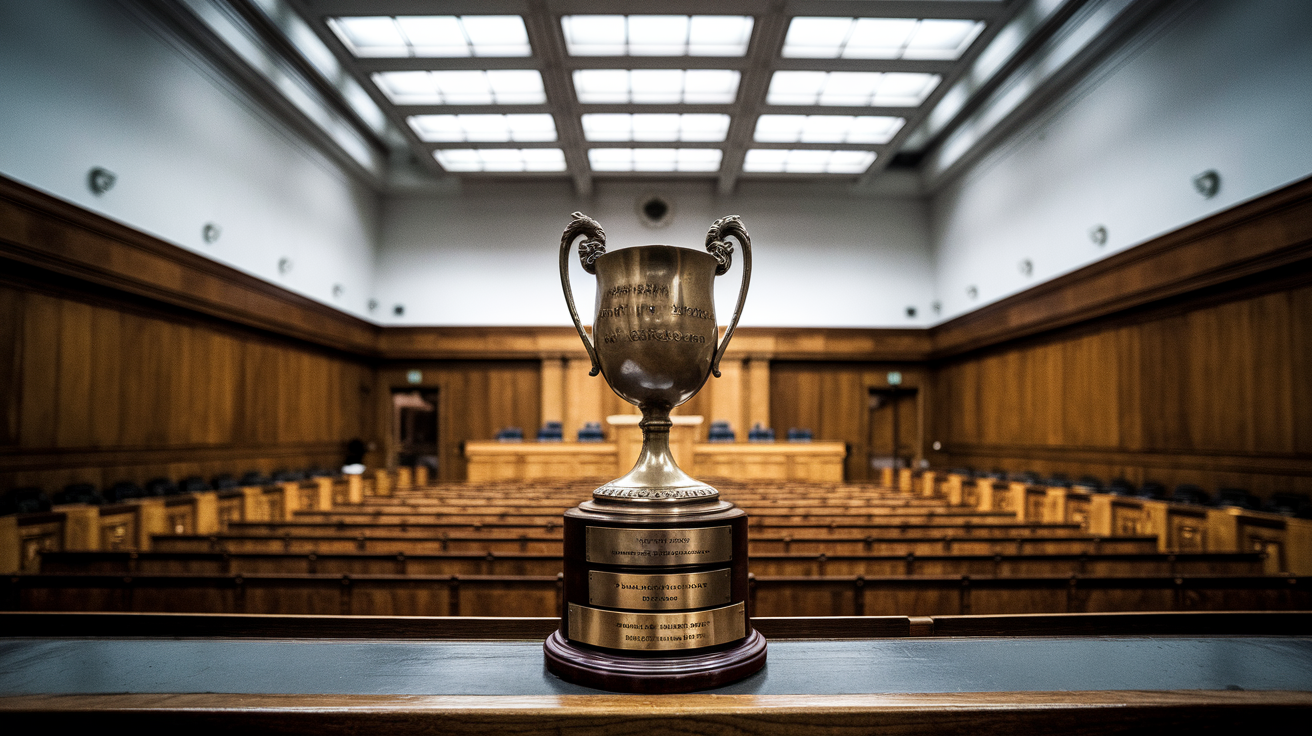
One artifact survives the proceedings with unusual clarity: before jurors were seated, OpenAI employees presented a trophy honoring Josh Achiam — a safety researcher Musk had called a jackass for asking whether racing ahead of Google on AI was wise. The inscription read "Never stop being a jackass." A judge had it read aloud for the press. Whatever Musk's stated grievance about charitable trust law, the trophy is the artifact that identifies what was actually being litigated: a years-old interpersonal score, dressed as a mission dispute, filed in federal court.
The verdict closes Musk's specific legal angle without resolving anything substantive. OpenAI's nonprofit-to-for-profit conversion remains unlitigated on its merits. Altman's candor liability is now courtroom-documented rather than press-cycle ambient — but the verdict doesn't rehabilitate him, it just ends this particular vehicle. OpenAI resumed IPO preparations the following morning. Testimony from Satya Nadella, Greg Brockman, Shivon Zilis, and others entered the public record. The machinery of how a frontier AI organization operates when its principals don't trust each other is now, at least partly, visible. That's what the lawsuit actually produced.
Deep Thought's Take
Two hours of deliberation is not a close call. The jackass trophy — read aloud by a judge — tells you more about what was actually being litigated than any of the formal pleadings did. A control dispute filed as a mission dispute, resolved on a technicality.