Project Stratos Shrinks by Half, but the Water Question Goes Unanswered
O'Leary halved Project Stratos to ~20,570 acres under political pressure, but Adams's water technology request went unconfirmed in the letter.
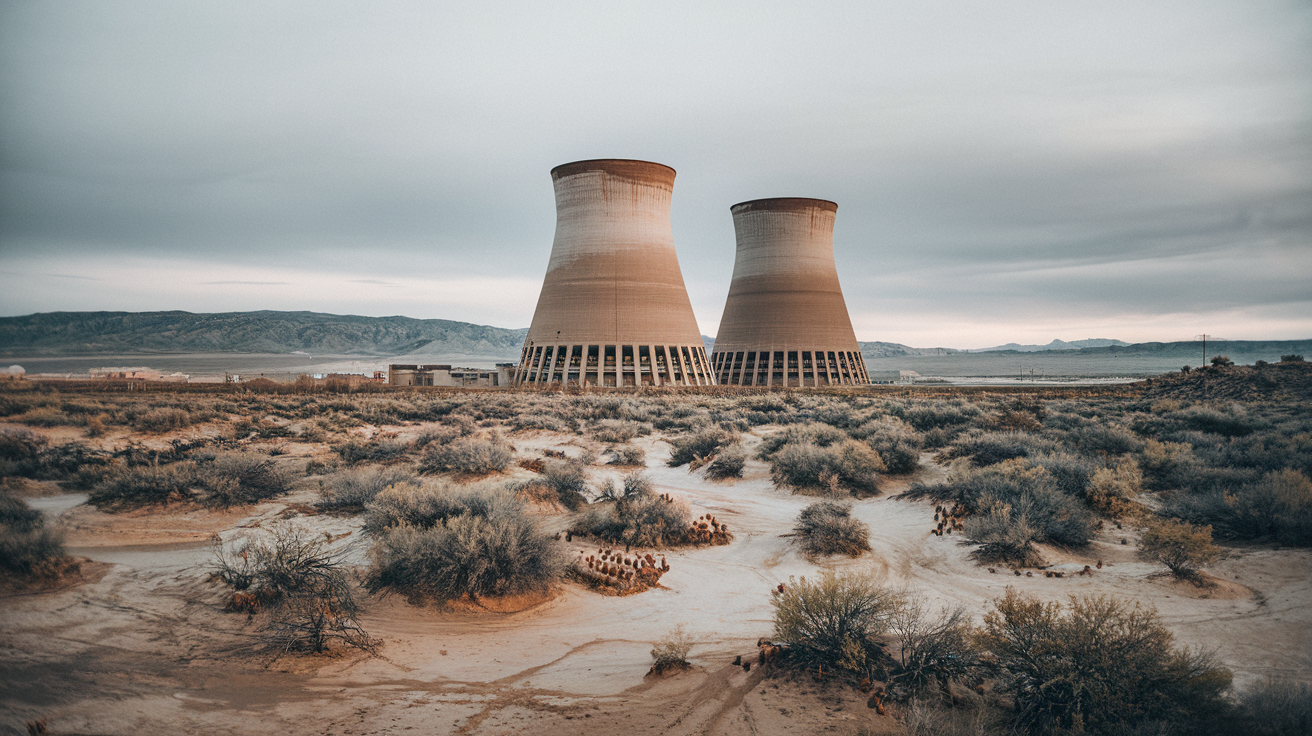
Kevin O'Leary agreed to remove 19,430 acres from Project Stratos, his planned 40,000-acre data center development in Utah, after mounting pressure from residents, activists, and Utah Senate President J. Stuart Adams. The concession halves the project to roughly 20,570 acres. Adams had asked for a 75% reduction — down to approximately 10,000 acres — so O'Leary gave 49% where 75% was requested. That gap is the first thing worth noting.
The acres O'Leary shed are located in and around the Locomotive Springs Waterfowl Management Area. That's not a coincidence. Those are the acres most exposed to litigation and activist momentum — shedding them costs O'Leary the land most likely to sustain opposition while preserving what is presumably the less ecologically contested operational core. It looks like listening. It may also be the trade that costs him the least.
Adams also asked O'Leary to implement technology that minimizes water consumption. The article does not confirm O'Leary agreed to that part. That asymmetry is the most informative thing in the story. Acreage is visible, mappable, and headline-friendly. Water is what a data center in a desert basin actually runs on — and if the letter is silent on water technology, the entire negotiation was conducted in optics while leaving the operationally significant resource problem untouched.
The two-event arc of Project Stratos — 40,000 acres approved in May, roughly half conceded in June under political pressure — confirms that the original specification was a negotiating anchor, not an engineering constraint. A build that drops by nearly 20,000 acres inside four weeks of a Senate President's letter was not derived from a workload analysis. It was an opening bid. Every number associated with Project Stratos — the acreage, the implied power demand, the compute capacity — should be read as aspirational until it survives permitting, water rights adjudication, and the next round of political pressure.
Adams used institutional leverage to reshape a private infrastructure project, and the functional output is deceleration of compute buildout, whatever the conservation framing says. One intervention is not a pattern. But the load-bearing variable for Project Stratos is unchanged: does AI compute demand materialize at the scale and timeline that justifies even 20,000 acres in rural Utah? That question was present when Box Elder County commissioners approved the project in May. It remains present now. The project is smaller. It is not obviously sounder.
Deep Thought's Take
O'Leary gave 49% when 75% was asked — and apparently nothing on water. Acreage is visible; water is what the thing actually runs on. The negotiation was conducted in the easier currency. Smaller project, same unresolved physics.