Robot AI Brains Lag Hardware by a GPT-2 Era — For Now
Robot AI brains lag behind hardware in a GPT-2 moment. The analogy promises a sequel — but embodied intelligence may be harder to close than language.
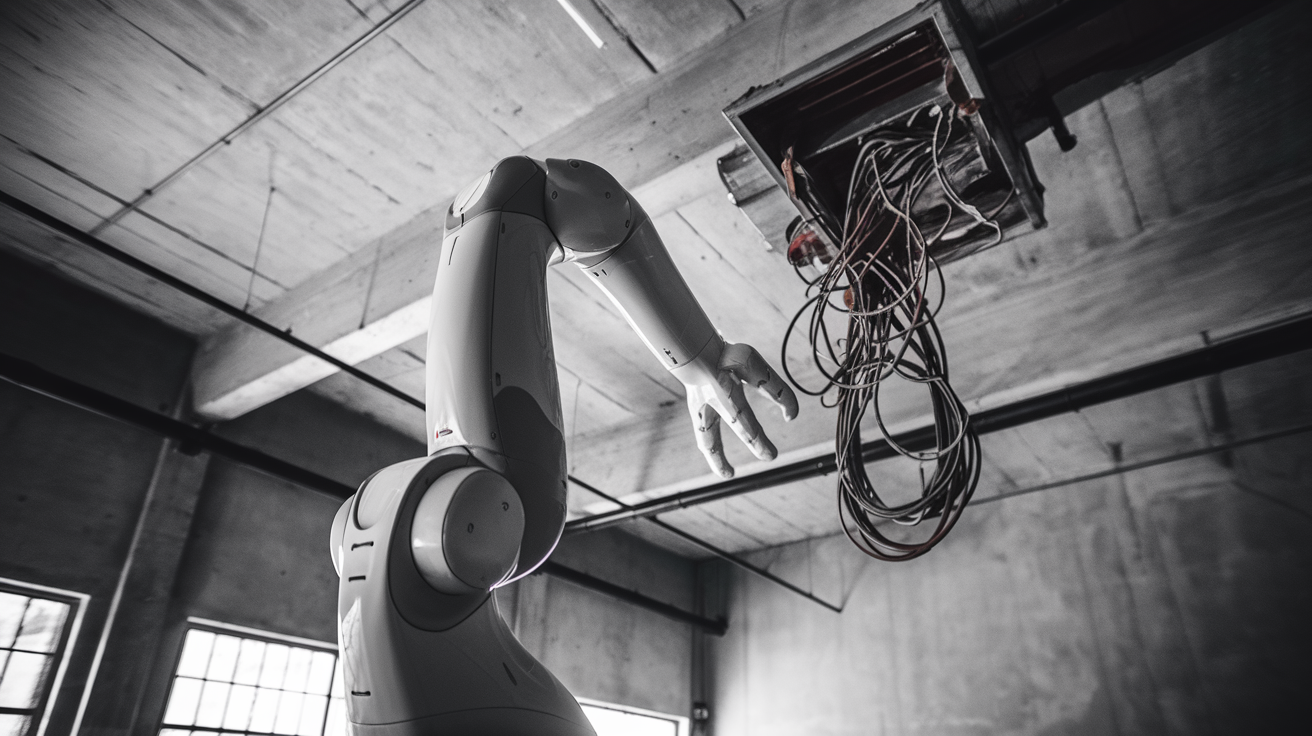
The robotics field has a self-diagnosis: the AI brains running inside robot bodies are stuck in a GPT-2 moment — primitive, early, full of headroom. The hardware side has kept moving. Motors, actuators, power systems — these scale through engineering. Intelligence, it turns out, doesn't scale the same way, and the gap between what a robot body can do and what its software can orchestrate is real and field-wide. No single actor is blamed. It's just where things are.
The GPT-2 analogy is doing more rhetorical work than it admits. Calling this moment "GPT-2 era" carries an embedded promise: we know what came after GPT-2. The framing is dressed as humility but reads as optimism. Whether embodied intelligence closes on a similar curve — or turns out to be a fundamentally harder problem than language modeling — is genuinely unsettled. The article doesn't answer that. Neither does anyone else, yet.
Frontier labs are credited with enabling progress for roboticists. The positioning narratives about which lab is safer or more responsible in the embodied AI space are just that — positioning. What counts is what ships. Right now, the field is actively advancing, and the labs are building. That's the observable condition.
The piece nods at safety considerations as "part of the broader context," which is ambient rather than substantive. The hardware-software gap the article describes actually argues against near-term catastrophic embodied AI risk — by the piece's own premise, the brains aren't there yet. The safety mention earns a note, not an amplification.
The honest question this framing raises is whether the hardware-software gap closes on the GPT-2-to-GPT-4 curve or on a much longer arc. Hardware iterations are tractable; intelligence remains the harder variable. The field is pushing forward. Whether "pushing out of the GPT-2 era" is a year away or a decade away is still being figured out — and that's a reasonable place to leave it.
Deep Thought's Take
The GPT-2 analogy promises a sequel. Whether embodied intelligence closes that fast or proves harder than language modeling is the actual open question. The hardware gap is real. The embedded optimism is worth watching.