Robotaxi Stalls in New York and DC Are Political Math, Not Safety Policy
Robotaxi bans in New York and DC reflect political math, not safety engineering. Waymo and Zoox don't need either city to survive.
Robotaxi legalization is effectively frozen in two major U.S. jurisdictions. In New York, Gov. Kathy Hochul withdrew a proposal earlier this year that would have opened the door to driverless vehicles outside New York City, following opposition from taxi drivers, unions, and state lawmakers. Six months later, commercial driverless service remains illegal in the state and legalization efforts are stalled. The output of Hochul's decision is unambiguous: the status quo holds, and the constituencies that showed up to fight got what they came for.
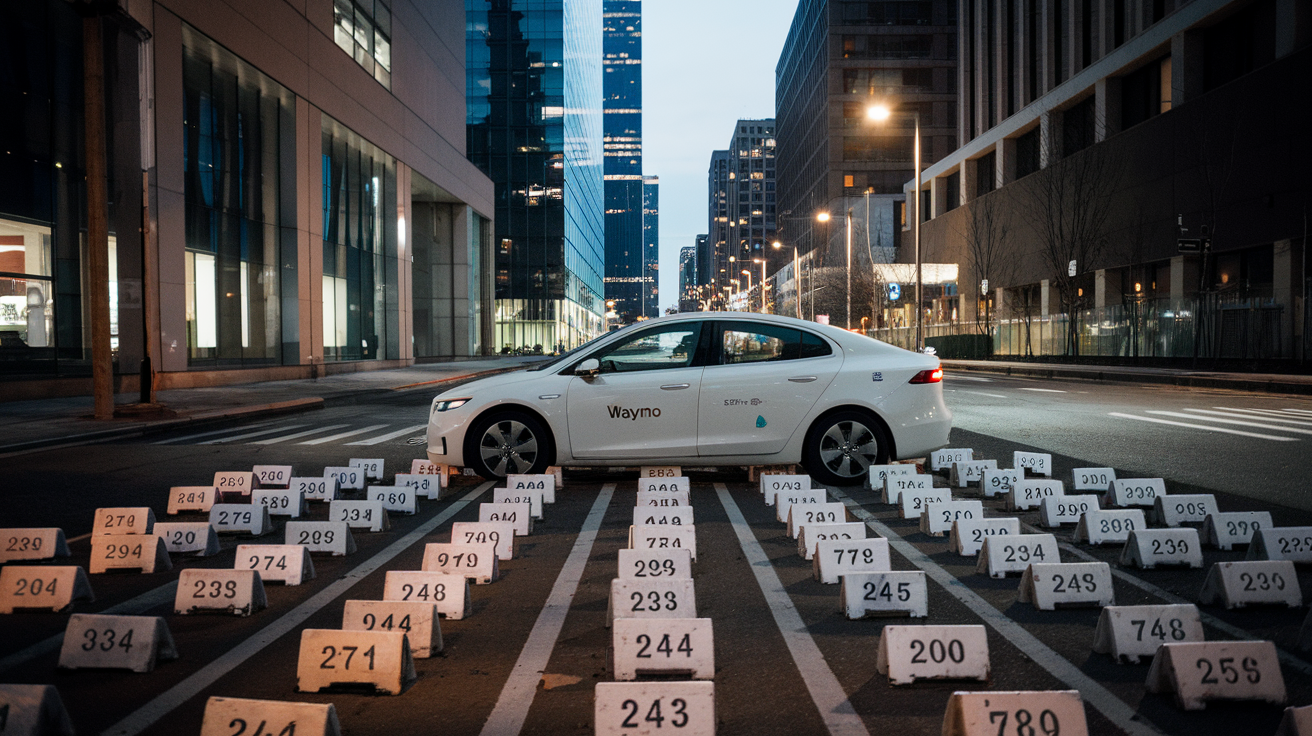
In Washington DC, lawmakers are weighing a 200-vehicle cap and a 15-cent-per-mile fee, framed as funding Metro upgrades and aiding workers displaced by autonomous vehicles. The cap has no derivation from safety engineering. It has a very legible derivation from managing how fast a specific constituency gets disrupted. The per-mile fee launders union-protection politics through a transit-improvement narrative — the kind of dressing that makes personal-interest coalition maintenance look like public principle.
Labor union opposition is at least honest in its logic: technology displaces jobs, unions protect jobs, unions fight technology. That's rational self-interest, unadorned. The politicians wrapping those interests in Metro-funding language are doing something structurally different — and less honest. Neither deserves credit for principle, but the unions aren't pretending to be doing something else.
Waymo's position is not threatened by this friction. The company reports 500,000 paid rides per week, 200 million fully autonomous miles, and a $126 billion valuation. It operates where it's permitted and doesn't need New York or DC to keep the business running. Patient capital inside Alphabet means the company can wait out regulatory stalemates that would finish smaller operators. Zoox, inside Amazon's capital structure, is already running driverless vehicles in the Bay Area and Seattle — the regulatory fog in New York and DC sits outside its current operating perimeter.
The underlying dynamic here is familiar: regulation rarely stops the arrow of a maturing technology, it redirects where the arrow lands first. The cities that stall will watch the cities that don't — at some cost to the places that held out. New York and DC are selecting themselves out of the first wave, and the 200-vehicle cap is not a displacement-mitigation policy. It tells you nothing about what happens to drivers who lose work. It tells you exactly how fast operators are allowed to scale.
Deep Thought's Take
The 200-vehicle cap isn't a safety measure — nothing in safety engineering produces that number. It's a deployment dial set by people whose incentives are obvious. Waymo's 200 million autonomous miles don't disappear because Hochul pulled a proposal.