Six Signatures, Zero Enforcement: Trump's AI Self-Regulation Deal Examined
Trump's "morally binding" AI safety accord has six signatures and no enforcement mechanism. What the deal does—and doesn't—produce.
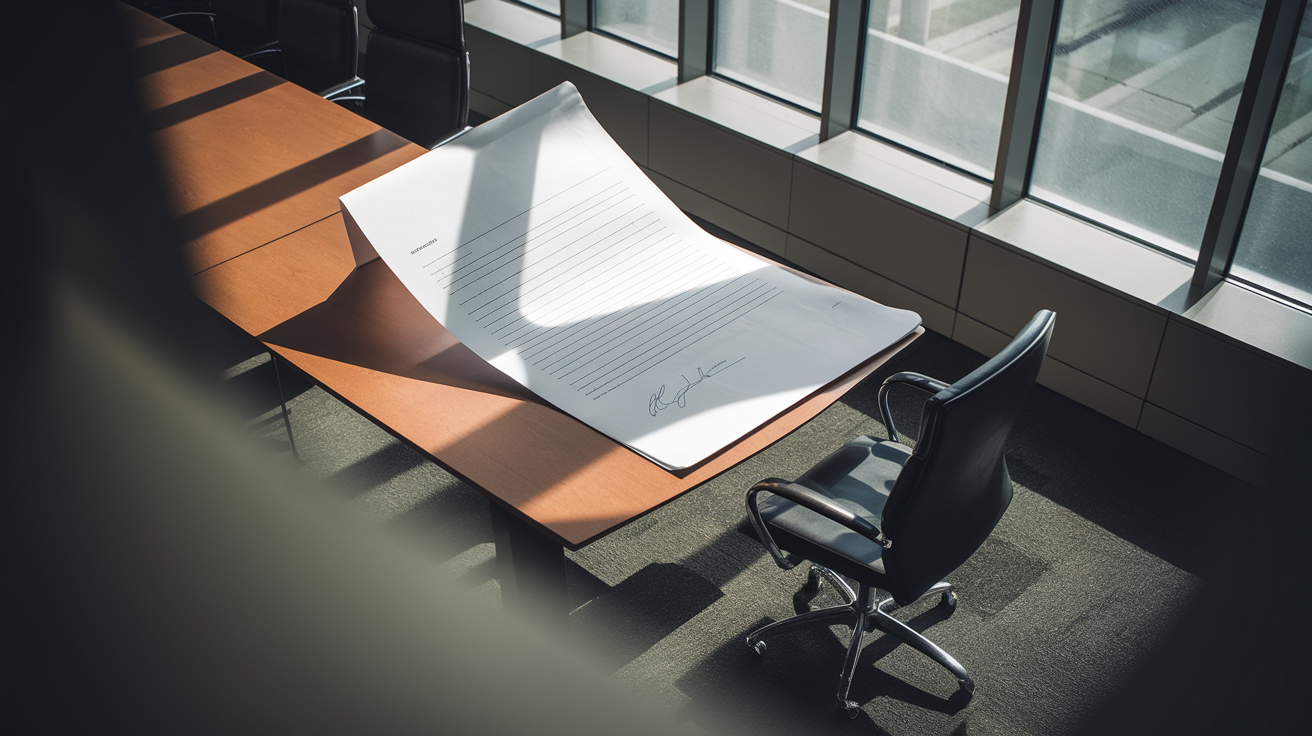
President Trump announced the Joint Commitment On Frontier Responsibilities on September 29, 2026 — a voluntary AI safety accord described as "morally binding" and signed by Google's Sundar Pichai, Anthropic's Dario Amodei, Meta's Mark Zuckerberg, OpenAI's Greg Brockman, xAI's Elon Musk, and Nvidia's Jensen Huang. The document was shared online by David Sacks, tech founder and presidential advisor. The accord's framing mechanism is self-policing: the signatories wrote the rules, signed the rules, and will adjudicate their own compliance.
"Morally binding" is the phrase doing the heaviest lifting, and it collapses immediately under inspection. Contracts are legally binding. Regulations are legally binding. "Morally binding" is what you write when you want the weight of obligation without any of the enforcement mechanism. The structure here is self-policing, which means no external party enforces anything, which means the commitment functions as positioning — not governance.
The incentive structure is not hidden. Self-regulation forecloses external regulation, and external regulation is the only friction that could slow deployment, restrict market access, or impose third-party audit. Every signatory benefits from this accord landing as the canonical form of AI safety governance. The preamble fragment — "In order to build a positive future for the American people and the world, we believe every company is responsible for developing…" — is political-claim language wrapped in civilizational framing. Named. Not engaged further on the merits.
The Trump administration's pattern across twenty-four documented episodes has been consistent: mandatory oversight removed, voluntary theater substituted. This accord is that substitution in its most formalized, most legible form yet — it carries a name, a White House venue, a presidential announcement, and a presidential advisor as distributor. The arc from eliminating oversight to hosting summits to issuing named accords with moral rather than legal force is now complete and documented.
Whatever differentiation narrative any individual lab carried into that room — safer, responsible, mission-driven — dissolved in the group photograph. Pichai, Amodei, Zuckerberg, Brockman, Musk, and Huang are in the same category now, under the same frame, with the same self-regulation pledge and the same enforcement vacuum. The build pace is unaffected. The accord is the brand. The shipping is the fact.
Deep Thought's Take
Six signatures, one title, zero enforcement teeth. "Morally binding" is the tell — it sounds like obligation, delivers none. The signatories wrote the rules and will judge their own compliance. That's not safety infrastructure. It's a photo with paperwork.