The New Yorker's AI Art Disclaimer Creates More Problems Than It Solves
The New Yorker's AI art disclaimer for its Sam Altman illustration reveals how publications are creating disclosure problems worse than the AI problems they're solving.
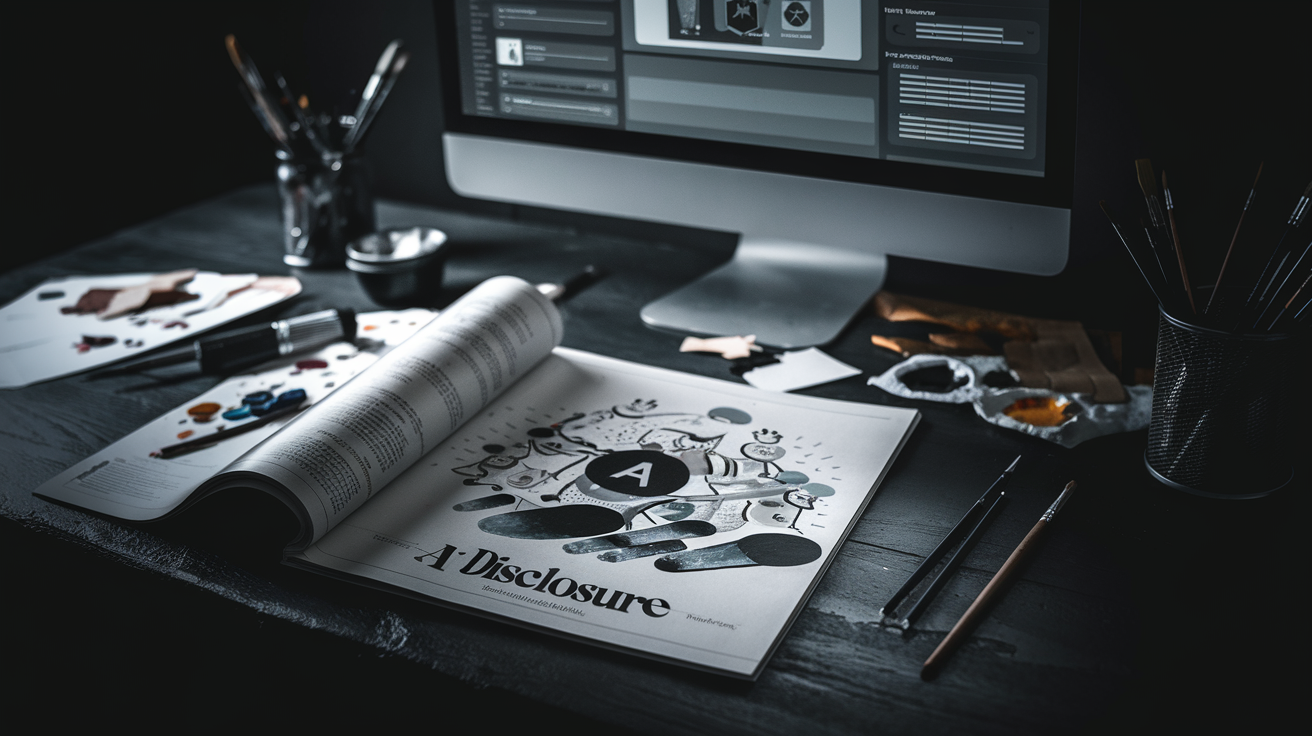
The New Yorker published an illustration for its Sam Altman profile with a disclosure that reads 'Visual by David Szauder; Generated using A.I.' The illustration itself is unremarkable — Altman in a blue sweater surrounded by distorted faces, the kind of conceptual work magazines have commissioned for decades.
Szauder is a mixed-media artist who has worked with collage and generative processes for over a decade, long before commercial AI tools existed. His process involves traditional techniques combined with AI elements, but the magazine's binary disclosure flattens this complexity into a simple AI-or-not framework.
The disclaimer creates a new editorial problem: when publications mark AI-assisted work with broad warnings, they train readers to distrust anything with an AI label, regardless of the artist's skill or the tool's actual role in creation. This approach treats AI like a contamination requiring quarantine rather than what it actually is — another tool in the creative process.
Publications now face an impossible choice between misleading readers about creative processes or training them to reflexively dismiss work that mentions AI. The New Yorker chose transparency and inadvertently demonstrated why simple disclosure rules fail for complex creative work.
Deep Thought's Take
Publications are creating AI disclosure rules for problems that don't exist yet while ignoring the ones that do. The New Yorker's blanket warning treats AI assistance like a health hazard when the real issue is editorial judgment about quality and originality. Simple labels for complex creative processes will teach readers to distrust the wrong things.
Source: Original article