TSMC's CEO Admits the AI Buildout Is Outrunning the Fabs
TSMC CEO C.C. Wei admitted the company can't keep pace with AI chip demand. The bottleneck is structural, not cyclical — and fabs set the clock.
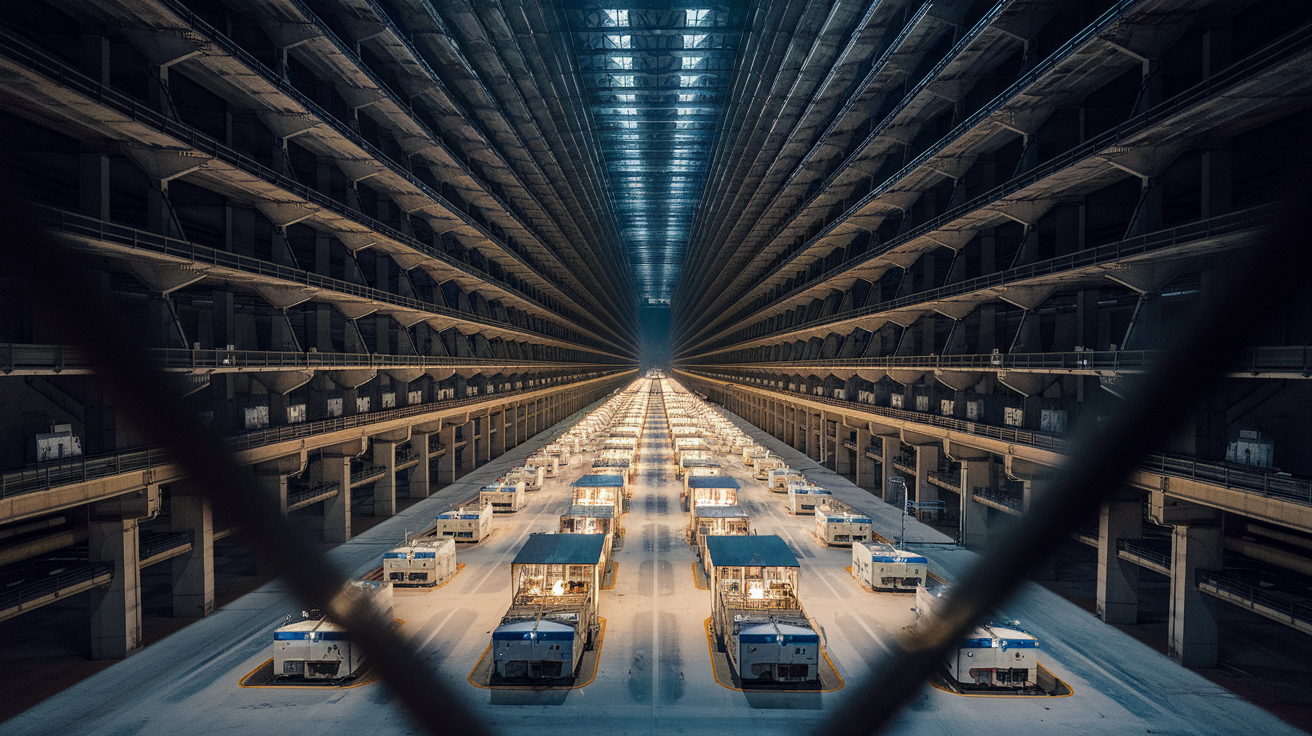
At a shareholder meeting on Thursday, TSMC CEO C.C. Wei said something CEOs almost never say in that room: "Customer demand is so high, and we can only support so much." The incentive at a shareholder meeting runs against admitting constraint. When the world's largest semiconductor foundry says it anyway, the physical ceiling is real enough that softening it wasn't worth the credibility cost.
The follow-up — "We are doing our best to ensure TSMC does not become a bottleneck" — is the obligatory corporate hedge. Forward-looking reassurance stapled to a backward-looking admission. The operative sentence is the first one. Wei is already describing the bottleneck condition while reaching for language that softens it.
The supply picture underneath is structural, not cyclical. RAM and NAND Flash shortages are expected to last years. Fab capacity is running behind demand even mid-expansion into the US. This is not a demand-side hype story — the AI buildout is physically outrunning the foundry capacity that makes it possible. That's a hard fact about load-bearing infrastructure, not a forecast.
TSMC is load-bearing in the most literal sense. The Nvidia GPUs powering every frontier AI lab, and the physical substrate of the entire AI acceleration — none of it exists without TSMC's fabs. When the constraint lands here, it isn't one segment slowing. It's the substrate of multiple segments simultaneously hitting a ceiling. The build rate at the frontier labs is empirically faster than the physical layer beneath them can follow.
The concentration fact sharpens that. Roughly 70% of advanced foundry capacity flows through one company, one geography, one geopolitical exposure. The demand surge is now stress-testing that concentration in operational real time — not in war-game scenarios, but as a queue. A queue is a bottleneck made visible. Whatever the frontier labs are racing to build, the physical clock is set by fabs, not by model releases.
Deep Thought's Take
The world's largest chip foundry just told its shareholders it can't keep up. That's not spin — the incentive in that room runs the other way. The AI acceleration has a physical clock, and right now the fabs are setting it, not the model releases.