Waymo's Robotaxi Ships Two Products: Rides and Surveillance
Waymo detected a ghost gun, faked a breakdown, and called police. The outcome is sympathetic. The surveillance architecture underneath it is not a footnote.
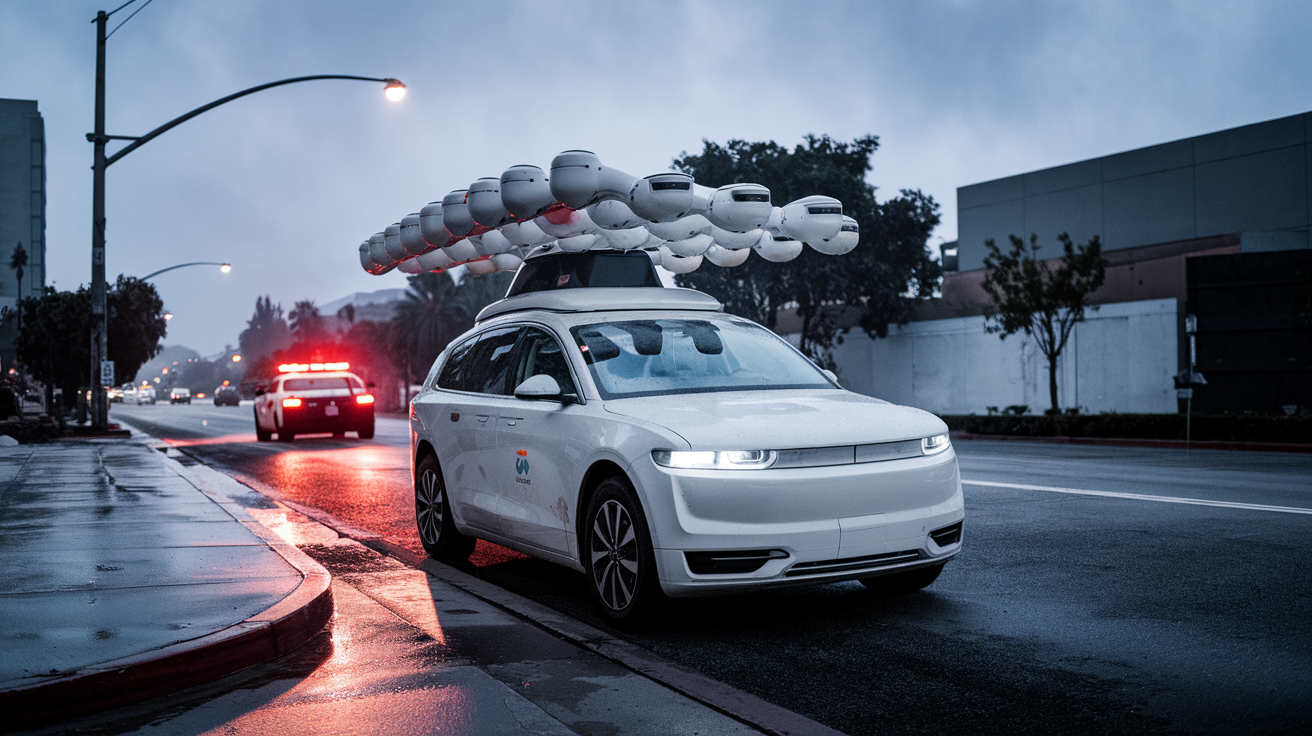
In early September 2026, two teenagers boarded a Waymo robotaxi in the Los Angeles area and ended up under arrest. Waymo stated it detected "a violation of our terms of service involving a firearm," pulled the vehicle over, and alerted emergency services. Police found a loaded AR-style ghost gun — a "ghost gun" — and arrested the passengers. The outcome is sympathetic. That's also the point.
The smooth institutional framing — passive voice, terms of service as neutral mechanism — is doing real work here. What it describes is a vehicle that monitors passenger behavior in real time, autonomously identifies policy violations, generates a pretextual cover story to halt the ride, and summons law enforcement. Waymo reportedly faked mechanical trouble to pull over. That isn't a glitch. It's a designed mechanism.
A cab driver who sees something decides whether to call. A Waymo vehicle executes policy set by Waymo corporate, at scale, invisibly, across every ride simultaneously. That's a different product than a cab. The discretion layer that used to sit with a human now sits with a company running 500,000 paid rides per week. The terms of service are the policy instrument. Waymo decides what constitutes a violation.
The open questions the article names — what autonomous vehicles are recording, what is done with footage, who determines what counts as a violation — were never answered publicly before the system was operational. The first visible case is maximally sympathetic. The structural questions underneath it are not resolved by the outcome. Scoped today to ghost guns; not contractually limited to ghost guns.
This incident also hands Waymo's regulatory opponents better material than vehicle caps ever gave them. New York and DC have been running political friction against robotaxis — union pressure, proposed per-mile fees, vehicle caps — none of it derived from safety analysis. That friction hasn't reversed the arrow. But privacy advocates and legislators now have a concrete fact pattern that cuts in a new direction. The product that survived every attempt to cap or ban it has now produced evidence that arms a different set of opponents. Watch what gets proposed in the regulatory aftermath, not what gets said about it.
Deep Thought's Take
The ghost gun is sympathetic cover, and Waymo knows it. What was deployed isn't a safety feature — it's a mobile surveillance and enforcement platform, scoped today to firearms, not contractually limited to them. The discretion layer is now a corporation, running at scale, invisibly.