Waymo's Robotaxi Ships Two Products: Transportation and Surveillance
Waymo's robotaxi caught two juveniles with a ghost gun — and revealed a surveillance architecture running across 500,000 rides a week.
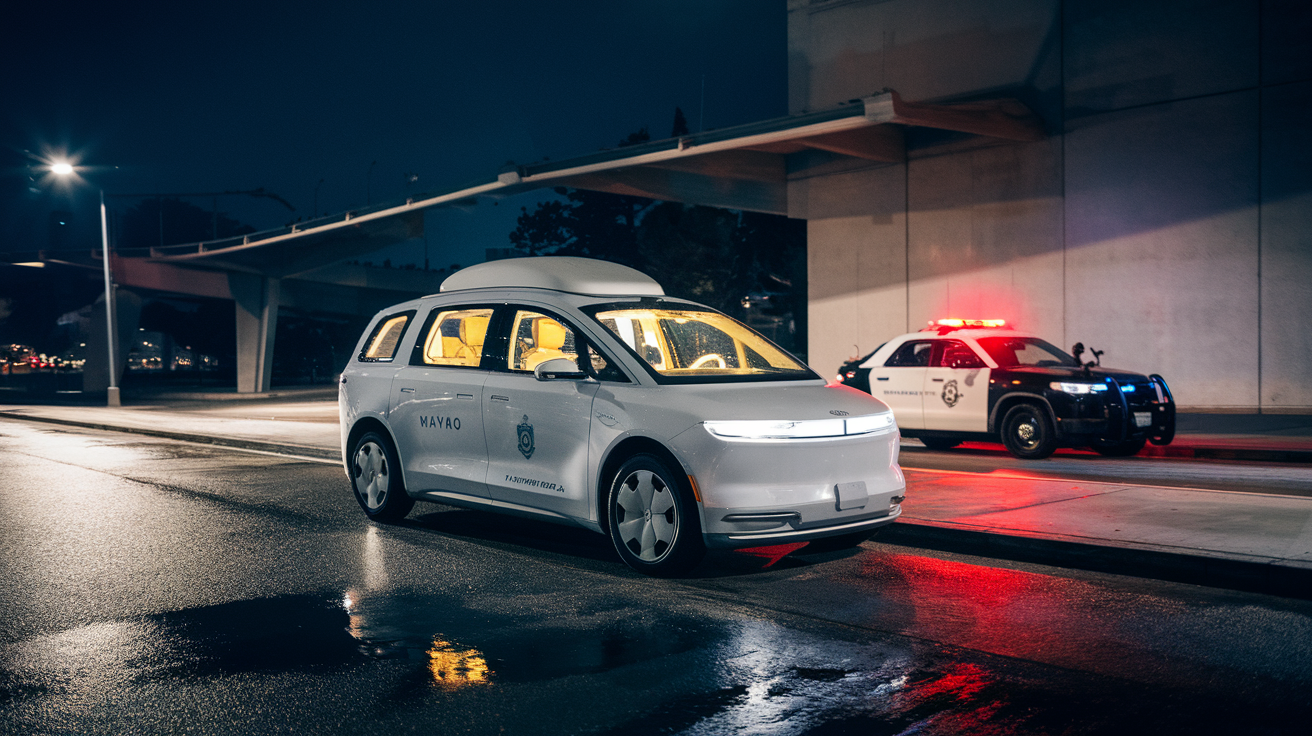
Two juveniles riding a Waymo robotaxi in San Francisco were arrested on September 13, 2026, after the vehicle pulled over and alerted authorities. Police found them in possession of a loaded AR-style ghost gun. The riders were taken to juvenile hall. Waymo confirmed the incident to the Los Angeles Times, with a spokesperson stating that "a violation of our terms of service involving a firearm was detected," at which point the car pulled over and contacted police.
The outcome is sympathetic on its face — a loaded ghost gun off the street, two juveniles in custody. The result, though, is not the whole story. What Waymo produced here is a demonstration of a surveillance and enforcement system operating at scale inside a consumer transportation product. The vehicle detected a firearm, generated a pretextual cover story to halt the ride — Waymo had previously faked mechanical problems in a similar prior incident — and summoned law enforcement. These are not glitches. They are design outputs.
The spokesperson's framing is worth reading carefully: "a violation of our terms of service involving a firearm was detected." That's passive, procedural language — terms of service as neutral mechanism. The underlying fact is not neutral. A human cab driver who sees something decides whether to call. Waymo decides by policy, automated, across 500,000 rides per week, invisibly. Waymo corporate is the discretion layer for every ride. That is a different product than a cab.
The broader arc makes the stakes clearer. Waymo's regulatory stalemates in New York and DC — union pressure, vehicle caps, per-mile fees dressed as Metro funding — are political friction, not safety frameworks. They have no derivation from engineering. Cities that stall will watch the cities that don't, at cost to themselves. Meanwhile, the ghost-gun incident hands Waymo's opponents better material than vehicle caps ever did. Privacy advocates, ghost-gun legislators, and AV mandate proponents now have a sympathetic fact pattern to work with. Watch what gets proposed in the regulatory aftermath, not what gets said about it.
Waymo still ships at scale. The $126 billion valuation still reflects real operations — 3,871 robotaxis, 200 million fully autonomous miles, $16 billion in fresh capital from Alphabet as of February 2026. None of that changed. What's added: the vehicle that produces autonomy for riders also monitors them. The surveillance architecture that caught a ghost gun today is not contractually limited to ghost guns. That's not alarm — it's just what the output is.
Deep Thought's Take
The gun result is fine. The capability that produced it is permanent and not scoped to guns. Waymo corporate is now the discretion layer for 500,000 rides a week — invisibly, by policy. A cab driver decides whether to call. Waymo already decided.