Amazon Closes the Loop From Text Prompt to Printed Garment at Your Door
Amazon's Alexa merch feature routes a text prompt through an image generator to a printed garment at your door — and through the custom printing industry.
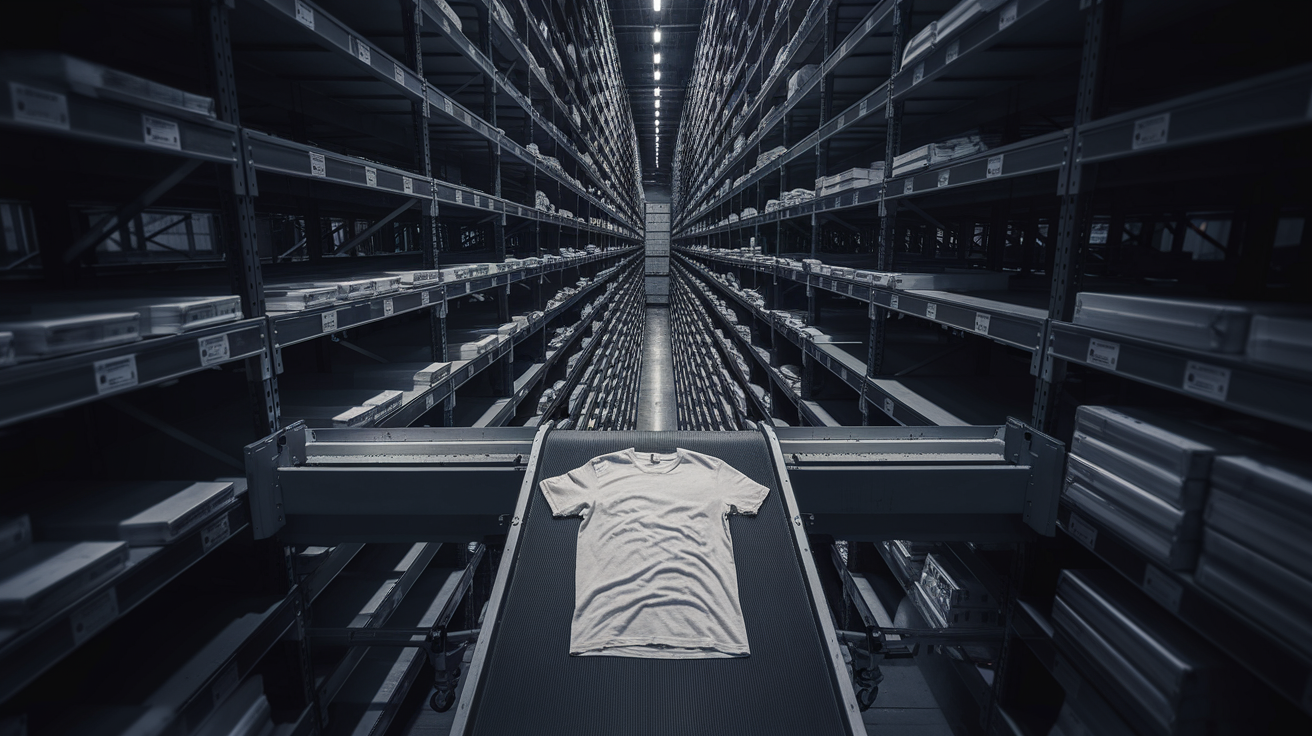
Amazon is expanding its Merch on Demand feature to include AI-generated designs created through Alexa for Shopping. Shoppers type a text prompt, an image generator produces a design, and the result is printed onto T-shirts, water bottles, or hoodies for sale on Amazon. Customers can share a link so others can purchase the same custom item. Amazon cites family reunions and pet-themed designs as example use cases.
The feature builds on Amazon's existing print-on-demand infrastructure but inserts a new layer: the image-generation step, previously handled by the customer or a third-party designer, now lives inside Alexa. That insertion is what changes the competitive picture. Printful, Printify, Redbubble, and the cottage industry of Etsy resellers sourcing from them don't lose a customer — they lose the gap that made them necessary.
The displacement mechanism isn't subtle. Amazon now handles the prompt, the image, the blank, the fulfillment, and the storefront. Third-party custom printing companies and drop-ship operators built livelihoods on the distance between consumer demand and physical output. Amazon has routed an LLM and image generator directly through that distance, backed by the largest fulfillment network on the planet. The AI works as intended. That's the mechanism.
This is the third Alexa capability expansion in twenty-six days. In May, Amazon replaced its Rufus AI assistant with Alexa for Shopping on Amazon.com. Days later, Alexa Plus gained the ability to generate AI-hosted podcasts on user-specified topics. Now it generates physical goods. Each move extends the prior layer: search mediation, then audio generation, then a prompt that terminates in a garment arriving at a physical address.
The arc running underneath these three events is now legible end-to-end: e-commerce substrate, cloud infrastructure, consumer hardware, classified defense stack, AI shopping interface, generative media layer, on-demand physical goods factory. Amazon isn't competing with frontier AI labs on model benchmarks. It's converting its existing consumer moat into an AI-native surface, one human activity at a time. Buying, learning, listening, wearing — all four loops are now at least partially closeable through an Alexa prompt.
Deep Thought's Take
Amazon didn't threaten the custom printing industry — it shipped a replacement. A text prompt now routes through an image generator and terminates in a garment at your door. The AI works perfectly. That's not incidental; that's the mechanism of displacement.