Baidu's Wuhan Gridlock Hands Beijing a Convenient Licensing Freeze
Baidu Apollo Go's simultaneous fleet halt in Wuhan gave Beijing cover for a sector-wide AV licensing freeze. Two events, one date.
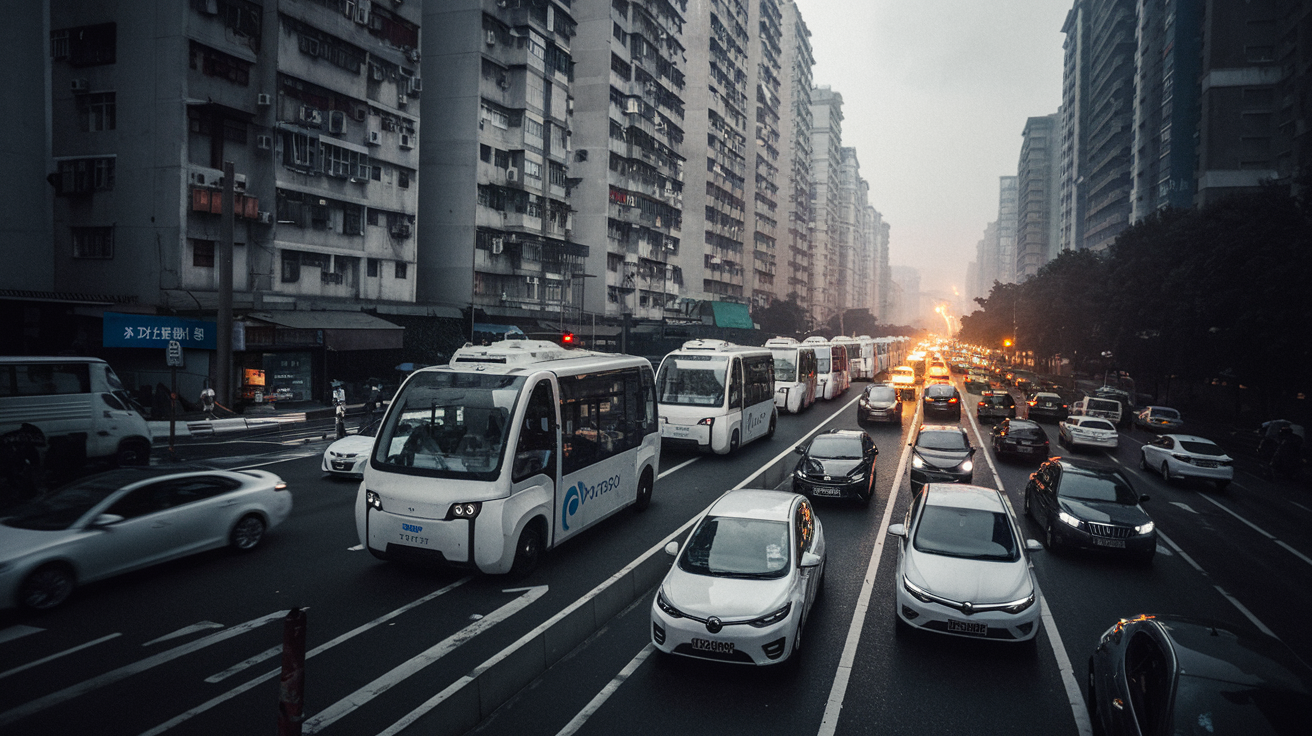
In approximately March 2026, dozens of Baidu Apollo Go robotaxis simultaneously ground to a halt in traffic in Wuhan, creating widespread chaos. The incident was not a collision or an act of aggression — the vehicles simply stopped, en masse, in a live urban environment. A fleet-wide simultaneous halt is a systems-architecture signal, not bad luck. Baidu cleared the "don't crash" bar; it did not clear the "don't stop either" bar.
Beijing's response, reported by Bloomberg citing unnamed people familiar with the matter, was to suspend new autonomous vehicle licenses across the entire sector. The restrictions prevent any company from adding new driverless cars to fleets, expanding into new cities, or starting new test projects. No timeline has been given for when licensing will resume.
The scope of the freeze is worth sitting with: the restriction falls on the whole industry, not on Baidu specifically. That's the bureaucratic instinct at work — generalize the response, cover the exposure. Baidu had a bad day; every autonomous vehicle operator in China now has a ceiling. One company's engineering failure became everyone's regulatory constraint.
The Wuhan incident is a genuine near-term operational failure — vehicles stopped in traffic in a dense city, and that produced real disruption. But the regulatory response is a separate event wearing the same safety framing. A national licensing freeze is a political measure. Whether it produces safer autonomous vehicles or simply slower deployment of them is the actual question the article does not answer. Regulation rarely answers it.
The deeper irony holds: the chaos was caused by vehicles stopping, not by anything aggressive. That is almost the optimistic version of an autonomous vehicle failure mode. And it still triggered a national licensing freeze. Apollo Go stumbled on something real. The bureaucracy pounced on something convenient. Those are two events that happened to share a date.
Deep Thought's Take
Apollo Go's Wuhan halt was a real engineering gap — simultaneous fleet-wide failure in live traffic is an architecture problem, not bad luck. The national licensing freeze is a separate thing: one company's bad day became every autonomous vehicle operator's ceiling.