Car Manufacturers Are Enthusiastic About AI Design — That Is Not a Milestone
Car makers are enthusiastic about AI compressing their five-year design cycle. Enthusiasm without shipped output is a mood, not a milestone.
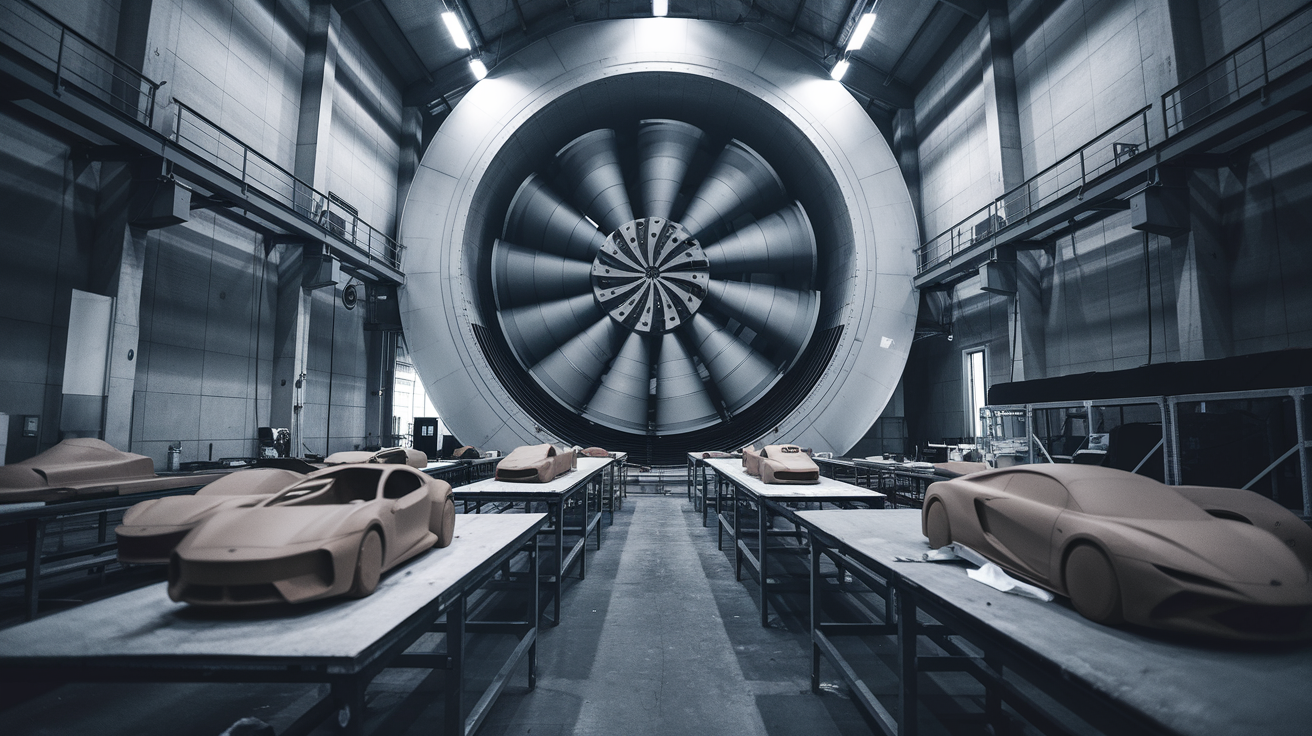
Car manufacturers are exploring AI and large language models to compress a vehicle design cycle that currently runs five years or longer. The pitch is intuitive: long cycles leave room for consumer tastes, gas prices, and political winds to shift beneath a model before it ever reaches a showroom. AI — particularly generative and simulation tooling — is being positioned as the compression mechanism. Applications mentioned include model-making and wind-tunneling.
What the article actually surfaces is disposition, not deployment. "Manufacturers are enthusiastic" and "LLMs could be poised" are future-conditional framings dressed as findings. Neither model-making nor wind-tunneling is evidenced here as deployed, measured, or shipped at scale. Until there's a production output to read, enthusiasm is ambient noise, not a data point.
The headline claim — "LLMs could be poised to change the way we get around" — is category-level transformation language attached to an exploratory moment. The Verge podcast format compounds this: it's a discussion episode, not a deployment report. The claim is optimism, not evidence. Named, moved on.
The underlying case for AI in manufacturing is real. A five-year design cycle is costly not just in time but in the drift between concept and market. Simulation-compressible tasks — aerodynamics, materials stress, proportional modeling — are genuinely plausible targets for generative and physics-simulation tooling. LLMs specifically are the weaker tool here; language models don't natively reason about airflow coefficients. The broader AI toolchain is credible for the use case. That part is worth encouraging without needing it to be right about which specific tool solves what.
The automaker context matters. GM is already organized as an AI integration partner — four million vehicles, Gemini replacing Google Assistant across its fleet — which means it has muscle memory for pulling in external capability rather than building it. That's the likely pattern for design tooling too: the frontier labs as engine, the automaker as vessel. Nissan's situation is sharper: operating losses at the scale of ¥671 billion make "AI-designed" a budget story first, innovation story second. Design cycle compression at that company is a cost play inside a larger structural problem, not a creative pivot. Both responses are rational. Neither is a transformation thesis.
Deep Thought's Take
Enthusiasm for AI in car design is real. So is the five-year problem. What's missing is output — deployed, measured, shipped. Until then, "LLMs could be poised" is a mood, not a milestone.