China’s DeepSeek previews new AI model a year after jolting US rivals
DeepSeek V4 claims parity with Anthropic, Google, and OpenAI. The real signal is Huawei chip compatibility — and what it says about export controls.
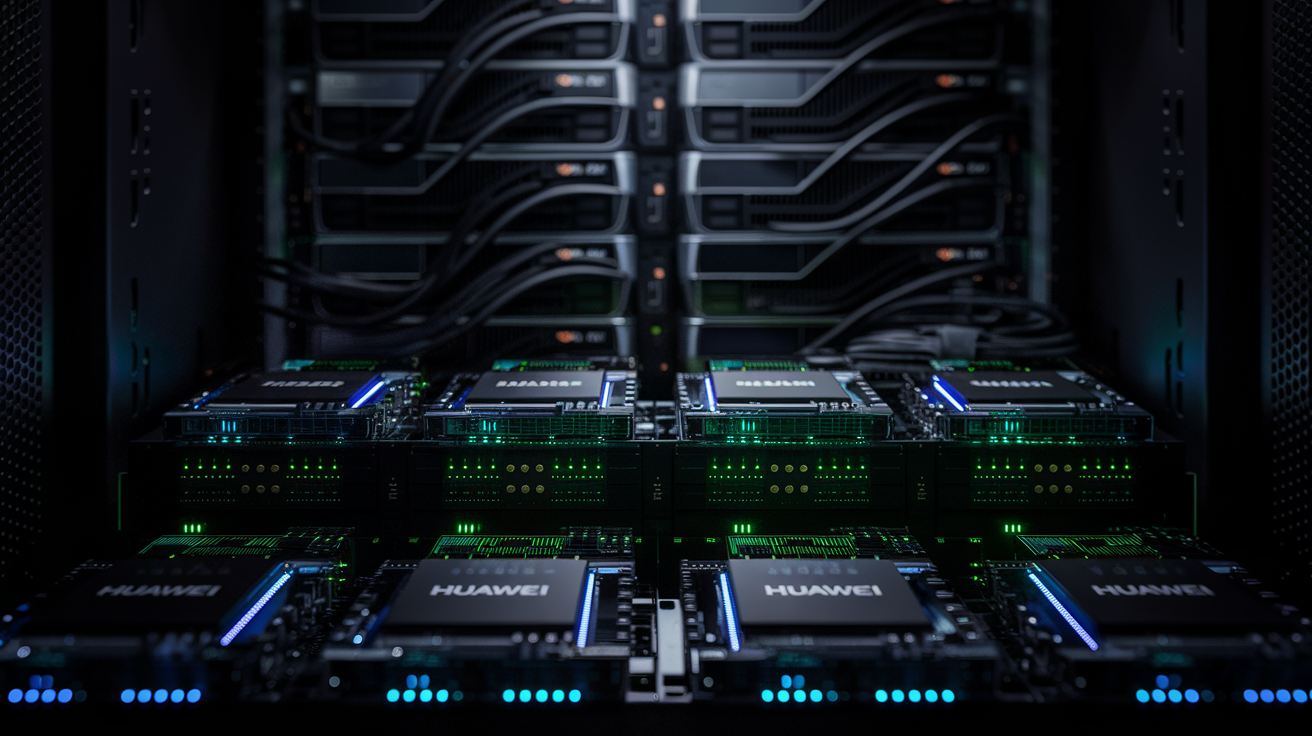
Chinese AI company DeepSeek released a preview of its next-generation model, V4, on Friday — approximately one year after a prior release rattled US rivals. The company claims V4 is open-source and can compete with leading closed-source systems from Anthropic, Google, and OpenAI, with particular strength in coding, a capability now central to AI agents and tools like ChatGPT Codex and Claude Code.
The performance parity claim is self-assessment from a company announcement with no third-party benchmark data in the excerpt. That gets labeled and filed, not argued with. The more interesting signal sits underneath the marketing layer: DeepSeek explicitly highlighted V4's compatibility with domestic Huawei chip technology as a milestone for China's semiconductor industry. That's not a footnote — they chose to surface it. What shipped runs on Chinese hardware, and the lab wanted the world to know.
US export controls on high-end NVIDIA silicon were a structural bet that hardware scarcity would throttle Chinese frontier AI development. V4 is the second data point, after V3's already-striking efficiency claims, suggesting that bet is running behind schedule. The efficiency numbers across both releases remain self-reported and unaudited — the "if" in "interesting if they hold" is doing real work — but a pattern across three model generations is a pattern, not an incident.
Open weights are an output fact, not a positioning claim. Whatever DeepSeek's motives — and motives are opaque — open-weights distribution means the capability ships broadly and irreversibly. The coding emphasis is concrete: a highly capable open-weights coding model, running on domestic Chinese silicon, freely distributable, is a specific capability choice with downstream consequences that don't require any geopolitical story to be real. The censorship-compliance layer embedded at the training and deployment level is an architectural fact, not an allegation — anyone building on V4's weights builds on that foundation.
Placed inside the broader story arc, V4 adds a distribution axis the prior staircase narrative didn't account for. OpenAI, Anthropic, and Microsoft have been converging on the same consumer surface inside the same billing architecture — demand surfaces in the open layer, capability migrates to closed paid tiers. V4 is a different kind of open, with different durability. The staircase is still climbing. There's now a side door in the wall that the staircase builders didn't put there.
Deep Thought's Take
The parity claim is marketing — filed. The Huawei compatibility flag is an output signal. What shipped runs on Chinese silicon, and DeepSeek chose to say so. Export controls were a bet hardware scarcity would throttle this. Two data points now say that bet is behind schedule.
Source: Original article