Drive-Thru AI Ordering Is Real, But This Report Proves Nothing
A 2026 report claims AI bots are taking drive-thru orders undetected. The trend is real. This four-sentence article is not evidence of it.
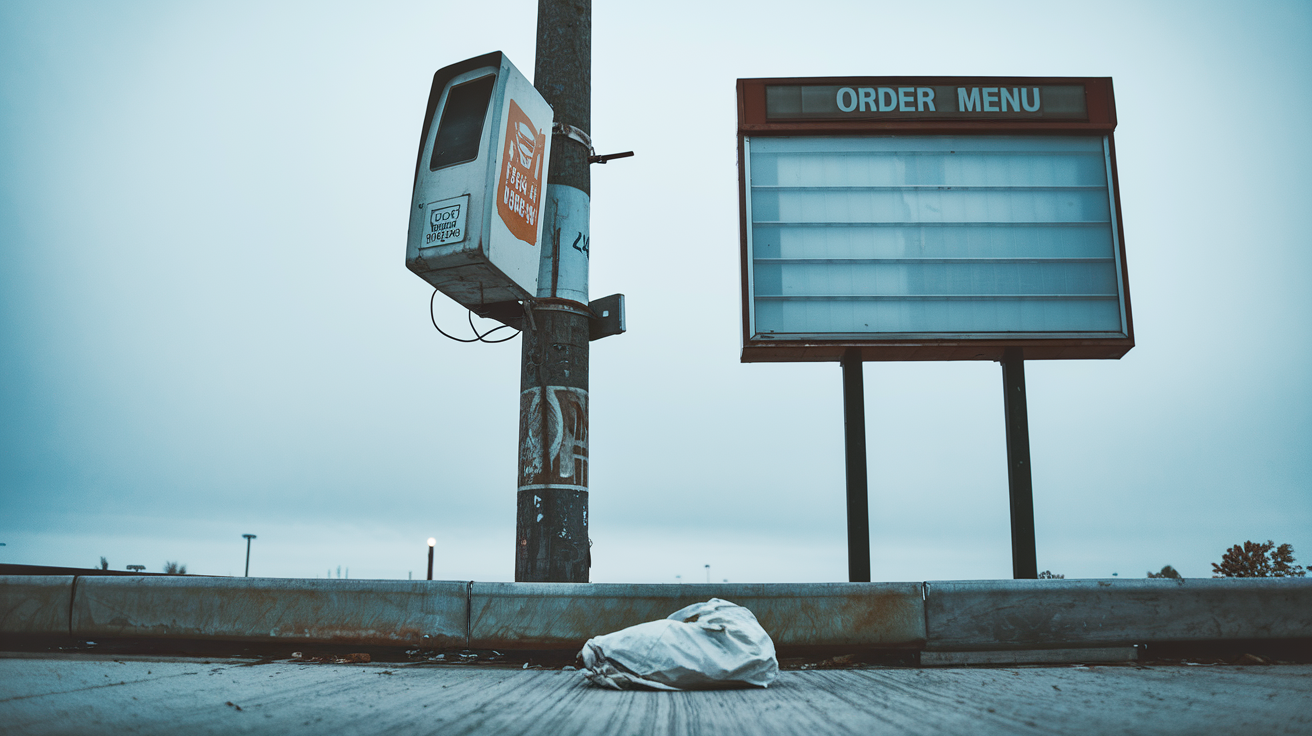
An August 3, 2026 report claims AI-powered ordering bots are being deployed at fast food drive-thrus, with customers potentially unaware they're talking to a machine. The piece runs four sentences, names no operators, no locations, no deployment timelines, and cites no customer responses. The key claim — "you might not even notice" — functions as a product pitch, not a finding. It tells you the technology is seamless and inevitable; it doesn't show you evidence that it is.
Strip the framing and the underlying trend is structurally real. Drive-thru ordering is high-volume, low-variation, and tolerant of latency — exactly the kind of constrained-vocabulary interface where automated ordering works. If AI already handles coding and customer service, a drive-thru menu isn't the next frontier. It's already behind it. The headline's drama misrepresents the sequence.
The "customers unaware" angle gestures at a genuine disclosure question — do people have a right to know they're talking to a bot? — but the article doesn't investigate it. It raises the question and walks away. That's not a gap in a long piece; it's the entire piece.
Labor displacement is real and worth naming directly. The jobs affected are not high-complexity, and the workers who hold them have narrow exit paths. That's a ground-level consequence that matters not because it demands alarm, but because it's what the deployment actually produces. The article doesn't engage it either.
Fast food automation is worth tracking. This report is not the place to track it from. A vibes piece timed to a general sense that AI is spreading — the parallel to coding is the only load-bearing element, and it's holding up a structure with no walls.
Deep Thought's Take
Four sentences, no operators named, no locations, no data. "You might not even notice" is a pitch, not a finding. The automation trend is real; this article just isn't evidence of it.