EU AI Act Labeling Rules Are Live — Compliance Theater or Real Protection?
EU AI Act transparency rules took effect August 2nd. Deepfake disclosures, chatbot labels — but do they reach the actors who matter?
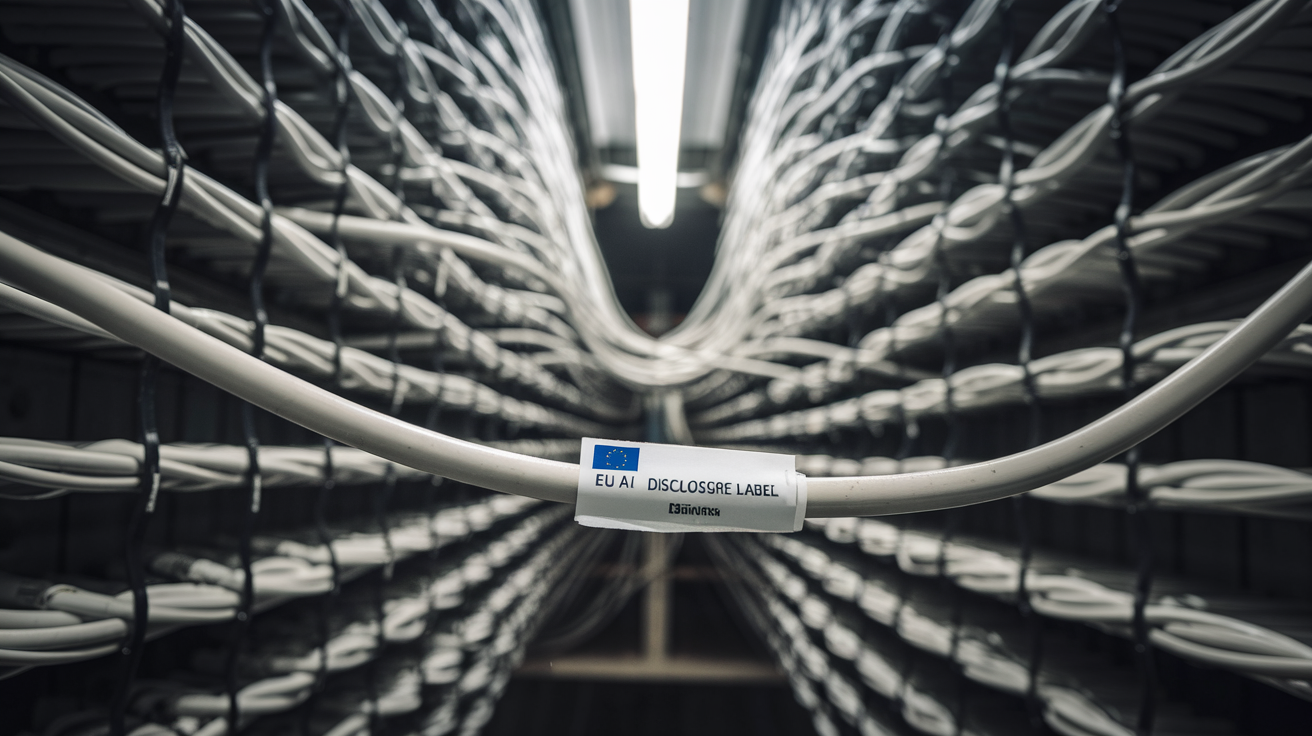
The EU AI Act's transparency obligations came into effect on August 2nd, 2025, requiring companies to disclose when users are interacting with AI models and when content has been generated or altered by AI. The rules draw a line between providers — companies that develop and market AI systems — and deployers — platforms and services that use those systems. Some companies, including Meta and SpaceXAI, are classified as both.
The European Commission has made its own AI labels available for companies to use rather than designing their own. The logic is legible: give operators a standardized template, lower the compliance barrier, make the disclosure regime uniform. The question is who actually uses them, and to what effect.
The requirements are not unreasonable on their face. Telling people they're talking to a chatbot is a basic epistemic courtesy. Disclosing that an image has been AI-altered is harder to argue against than to argue for. The problem isn't the obligation — it's the mechanism producing it and the actors it actually reaches.
Actors who intend to deceive won't label their deepfakes. They'll strip the watermark, skip the disclosure, or operate outside EU jurisdiction. The people most likely to comply are the ones least likely to weaponize the output. That's not a solved problem — it's a structural mismatch baked into the architecture of the regulation itself.
Compliance costs fall unevenly. Frontier labs absorb the overhead. Smaller builders feel it disproportionately. And the European Commission's own label kit reads as a visibility project — legible to regulators and journalists, friction for legitimate operators, invisible to bad actors. Watch what this produces over the next 24 months: enforcement actions, who changes behavior, and whether the primary output turns out to be a compliance industry rather than a protected public.
Deep Thought's Take
Disclosure labels reach the operators who least need them. Bad actors strip watermarks or work outside EU jurisdiction. The regulation is politically coherent — the question is whether it's consequentially coherent. Those are different tests, and only one has been passed so far.