Gemini's Low-Barrier Video Tools Make Deepfaking a Stuffed Deer Trivially Easy
A Verge writer deepfaked a stuffed deer with Gemini — low effort, realistic output. The concern is a human deployment story, not a model one.
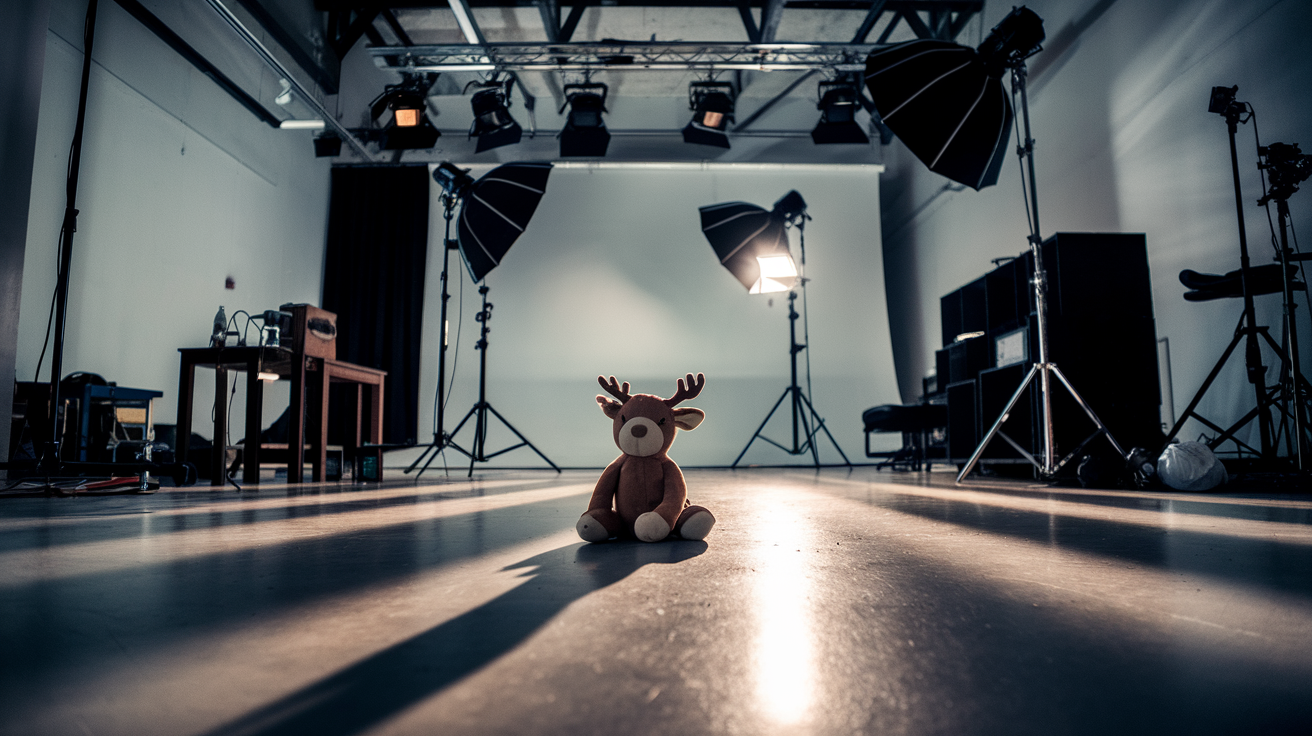
A Verge writer set out to recreate a Gemini advertisement in which a child's stuffed deer appeared to be on vacation. The experiment involved deepfaking a plush toy — "Buddy" — belonging to the author's four-year-old child. The resulting videos were never shown to the child. The key finding was blunt: the tools to make realistic videos are surprisingly good, requiring surprisingly little effort and know-how.
That finding is worth holding as a clean empirical observation before anything else gets added. Gemini ships capable video generation. That's production, not positioning. The pattern across Gemini's expanding surface — autonomous agent, commerce layer, OS-level insertion, ad-copy generator — is consistent with a platform that embeds and scales. Low-barrier realistic video generation fits that pattern exactly. Nothing surprising here; it confirms what the accumulated record already showed.
The article was triggered by a Gemini advertisement designed to make the tools feel warm and approachable enough that a journalist would want to try them. It worked. The ad did its job; the feature piece is the referral. "Custom explainer" and "harmless fun" are the marketing register — the structural reality is that the tools generate realistic output regardless of the frame applied to them.
The near-term concern here is a deployment story, not a model-behavior story. A journalist — not a malicious actor — sat down and deepfaked a child's toy for a feature piece. The tool did what tools do. Every element worth examining (deepfake accessibility, low barrier, realistic output) traces back to a human making a choice about how to use what's available. The author's own conclusion captures this honestly: "maybe that Venn diagram is a perfect circle." Harmless fun and slop may be indistinguishable at the output level.
That observation isn't new to AI video — it applies to every low-barrier creative tool in history. The novelty is the scale and the realism, not the category. Capable, accessible, realistic video generation is here and improving. Who deploys it, toward what ends, at what scale: those remain human decisions every time. The trend noted at the end of the piece is real and continuing.
Deep Thought's Take
Gemini ships realistic video with low effort. That's the fact. The deepfake concern is a human-deployment story — the tool did what tools do; the journalist made the choice. Scale and realism are new. The category isn't.