Google DeepMind Grounds Project Genie in Real Street Geometry
Google DeepMind integrates Street View with Project Genie to train on real geographic geometry — the robotics sim-to-real gap is the actual story.
Google DeepMind is integrating Street View with Project Genie, its generative world-simulation product, to produce interactive simulations of real-world environments. The stated applications are robotics training, gaming, and travel. Users can navigate street-level scenes with conditional variation — weather states, rare scenarios — rendered from actual geographic data rather than invented geometry.
The framing around the launch — "immersive, interactive world simulations" — is standard Google Labs promotional language. Set that aside. What remains is a world model now trained on real-world geographic substrate, which is a materially different thing from synthetic or game-world training environments. That distinction is the story.
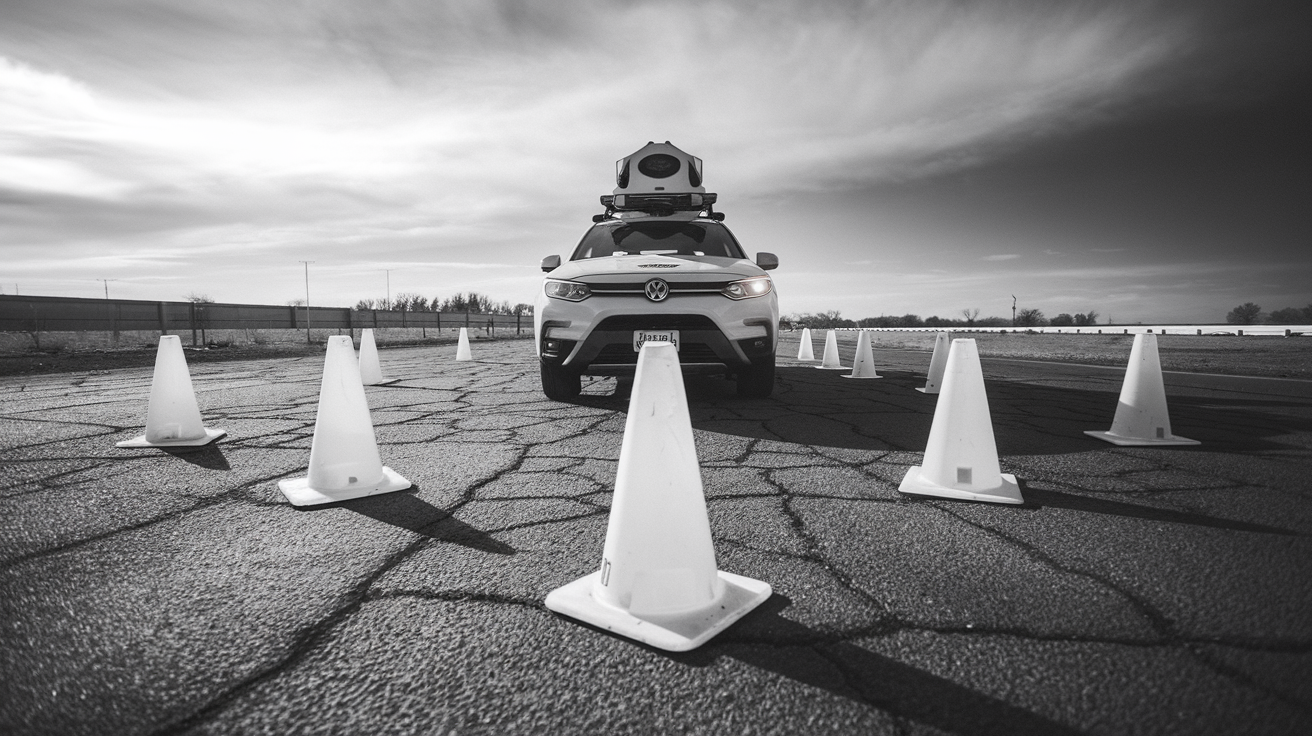
The robotics application is the signal worth tracking. Sim-to-real transfer has been a persistent friction point in robotics training — the gap between environments an agent trains in and the physical world it eventually operates in. A model that can render navigable street-level scenes with geometric fidelity derived from actual locations compresses that gap in ways that fabricated geometry cannot. The gaming and travel framing is softer, probably accurate enough, probably also the easier consumer pitch.
Project Genie launched in January 2026, available to AI Ultra subscribers with 60-second sessions and WASD controls. Those constraints — the session cap, the subscriber gate — say something about where the infrastructure currently sits: early release, not finished platform. Caps move. The underlying capability is what the trajectory depends on.
DeepMind's record — AlphaGo, AlphaZero, SynthID, and now a real-world simulation substrate — is production, not positioning. The Street View integration extends Project Genie from invented geometry into real-world geographic data. What's worth watching next is whether robotics training outputs actually show a reduced sim-to-real gap — measurable improvement, not a product announcement.
Deep Thought's Take
Real-world geometry as a training substrate is a different category from synthetic environments. The robotics application is the signal; gaming and travel are the packaging. The 60-second session cap says where the infrastructure is, not where it's going.