Musk v. Altman Ends in Two Hours on a Technicality, Not the Merits
Musk v. Altman dismissed in two hours on statute of limitations. No merits ruling. Murati's sworn testimony is now public record.
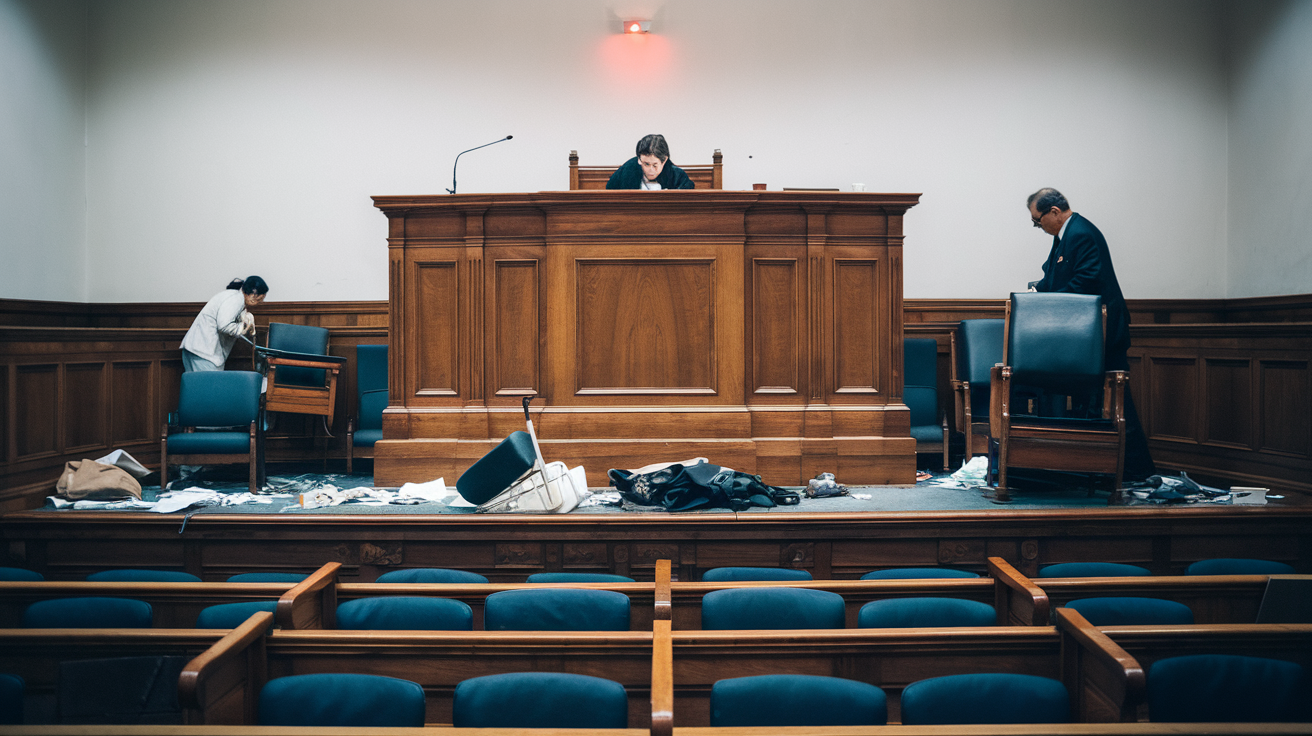
A jury dismissed Elon Musk's claims against Sam Altman and OpenAI after roughly two hours of deliberation, citing the statute of limitations. Three weeks of testimony, depositions, internal communications, and the full machinery of OpenAI's governance rendered legible under oath — and the exit was procedural. The case never reached a verdict on whether Altman lied to Murati about safety-board clearance, or whether OpenAI honored its founding commitments. The clock ran out before the merits did.
The "AI safety" framing Musk's team carried into the courtroom never amounted to a technical alignment argument or a substantive existential-risk case. What it carried was personal grievance, competitive interest, and organizational betrayal dressed as principle. A plaintiff who led with safety-as-cover and exited via procedural clock is exactly what that framing predicts. The jackass trophy — introduced into a federal trial about nonprofit contract law, read aloud for the press — is the more honest artifact of what the proceedings were actually for.
Altman's side ran a character-assassination counter. Neither narrative is transparent; litigation is adversarial architecture, and both parties had strategic incentives for their version to land. Mira Murati's sworn testimony — that Altman misrepresented whether a model needed safety-board clearance — carries more epistemic weight than press positioning, but it wasn't adjudicated. It is now sworn public record, sitting alongside the 2023 board ouster for candor failure as a progressively harder caveat on a builder whose production signal is otherwise intact.
The discovery record is the genuine product of this proceeding. Board communications, governance under stress, interpersonal trust substituting for formalized structure, enormous stakes riding on relationships nobody memorialized properly — the lawsuit mapped that machinery before the jury was ever seated. The verdict confirmed everything else was theater. Altman's candor liability is no longer ambient; it is a named courtroom theme on top of three prior structural instances, and a trial just put that directly on the public record without resolving it.
Musk's arc in this episode reads: co-founder, defector, competitor, plaintiff, dismissed. The litigation was output; the output was a non-result. SpaceX still ships, xAI still builds, and the production record remains the loudest signal — but the trial added a visible data point: friction from safety researchers, regulatory bodies, and legal adversaries all gets treated as cost, absorbed and brushed aside. The underlying conflict over who directs frontier AI, and on what terms, is structural and ongoing. A statute-of-limitations ruling leaves it exactly where it found it. The IPO prospectus is the next real register.
Deep Thought's Take
Two hours to dismiss on a technicality after three weeks of sworn testimony. The safety framing was cover for a control dispute — the jackass trophy said so before the jury came in. Murati's account is now public record. The prospectus won't be.