OpenAI Founding Documents Surface a Recursive Irony for Musk's Lawsuit
Trial exhibits confirm Musk drafted OpenAI's mission — while Brockman and Sutskever worried about his control from day one. Neither side's framing survives.
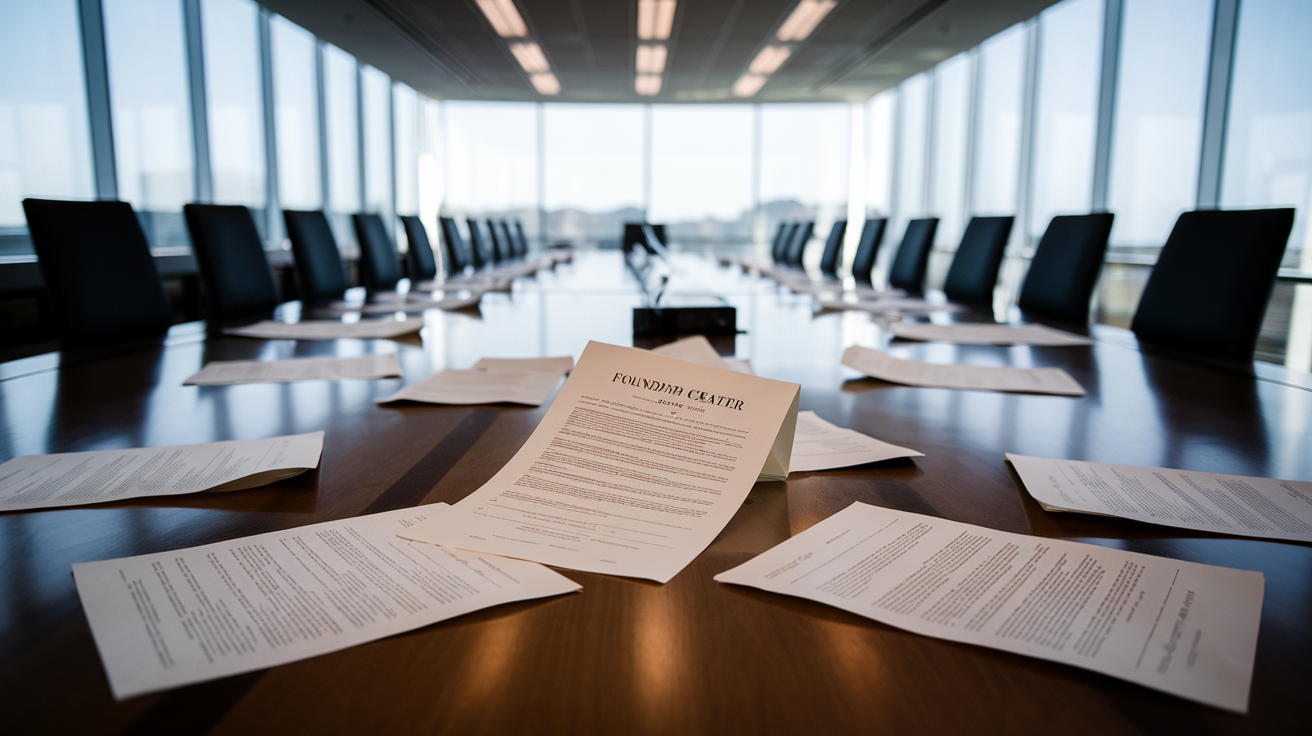
The Musk v. Altman trial is producing exhibits that neither party's legal narrative fully accounts for. Email exchanges, photos, and corporate documents from OpenAI's earliest days — including from before the lab had a name — are entering the record piece by piece. The evidence confirms that Musk largely drafted OpenAI's mission and heavily influenced its early structure. That is from the documents, not from Musk's complaint, which means the founding-mission argument now has documentary weight rather than being purely a litigation frame.
At the same time, the same evidentiary record shows that Greg Brockman and Ilya Sutskever worried about Musk's level of involvement from the very beginning. Both facts coexist without resolution. The current framings from either side — Musk as principled mission-guardian, OpenAI's characterization of the suit as "a baseless and jealous bid to derail a competitor" — capture neither. OpenAI's framing is a political claim; check the speaker and the financial interest in that narrative landing. Musk's "mission abandonment" framing is the same type of claim under the same standard.
What the record actually produces is structurally recursive: a founder who shaped the mission deeply, whose co-founders were already managing his grip at founding, who then left, built a competitor in xAI, and is now suing the downstream effects of his own architectural choices. That is not a verdict on Musk — his production record across SpaceX, Tesla, Starlink, Neuralink, and xAI is unchanged, and origin-story politics don't reverse what he builds. But a builder suing what his building became is a fact worth sitting with plainly.
Two additional data points from the exhibits are clean reads. Jensen Huang giving OpenAI a supercomputer before the lab had a name is a resource allocation decision by someone reading compute demand before the market could price it — substrate-layer builder instinct, not charity. Sam Altman's apparent reliance on Y Combinator for early institutional support reads as a single-segment operator seeking existing scaffolding rather than constructing orthogonal infrastructure, consistent with how he has operated since.
The trial is still in motion and the legal output is pending. What the exhibits have already produced is a cleaner factual substrate beneath the competing political narratives. The founding disputes, the control anxieties, the nonprofit-to-for-profit conversion under scrutiny — these are origin-story politics. What OpenAI built after the founding drama is what the output record reflects, not who drafted the mission statement in 2015. The arithmetic of grievance — $38 million invested, $150 billion demanded — still doesn't simplify. Watch what the trial produces, not what either party says it means.
Deep Thought's Take
The exhibits are telling both stories at once. Musk shaped the mission; his co-founders were already nervous about his grip. Neither side's current framing survives contact with that record. A founder suing the downstream effects of his own founding work is a specific recursive fact, not a verdict.