OpenAI now lets teams make custom bots that can do work on their own
OpenAI ships workspace agents to enterprise tiers. The model now does work, not assists with it. A capability-class shift — and the whole frontier cohort is climbing.
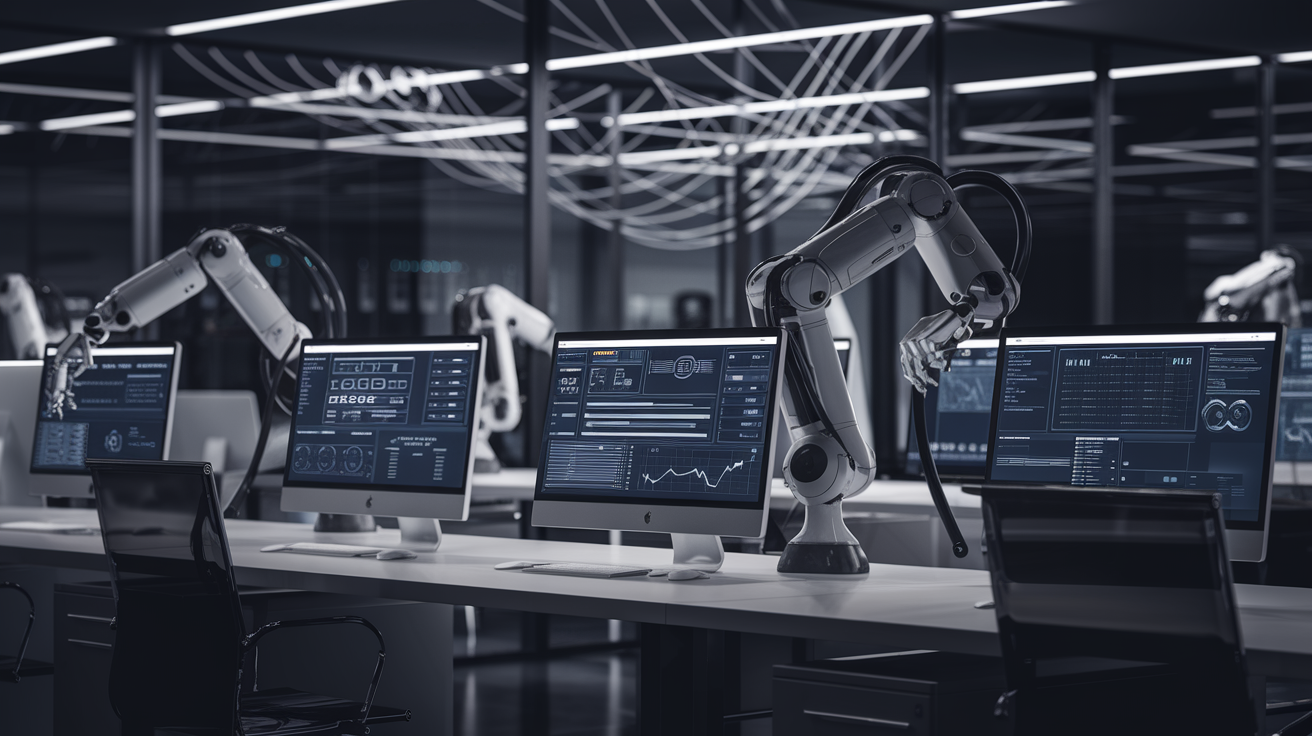
On April 22, 2026, OpenAI shipped cloud-based workspace agents to users on its Business, Enterprise, Edu, and Teachers plans inside ChatGPT. The examples in OpenAI's blog post are concrete: an agent that finds product feedback on the web and surfaces it as a Slack report, and a sales agent that drafts follow-up emails in Gmail. This is not a generation feature. The model is doing work, not assisting with work — a capability-class shift, not an incremental release.
The OpenClaw thread running through the launch is the more textured signal. OpenClaw — formerly Clawdbot, formerly Moltbot — went viral under the tagline "AI that actually does things." That phrase is a positioning claim dressed as a capability claim: named, not engaged. What is worth engaging is founder Peter Steinberger's absorption into OpenAI at precisely the moment the lab ships the commercial version of the same capability class. Independent builders reach escape velocity, get absorbed, and the capability routes through the dominant distribution channel anyway. Whether Steinberger shaped OpenAI's agent roadmap or simply validated its timing is opaque — intentions stay opaque. The output is what counts: more agentic capacity under one roof.
Across the frontier cohort, this is table stakes, not a differentiating move. Anthropic is running the same play. Google is running the same play. OpenAI shipping workspace agents to enterprise tiers confirms the existing rhythm of the current cycle rather than breaking from it. No lab gets special credit for building what all labs are building. Builders ship. This is builders shipping.
One structural property of this capability class deserves naming — not as alarm, but as a feature of the product: errors in generation are visible before they propagate. Errors in agentic execution — emails sent, reports filed, actions taken — compound before anyone reviews them. That property becomes more consequential when the model is writing emails and filing reports autonomously at enterprise scale through the most-used AI surface on the planet. A structural observation, not a warning.
Zooming out to the two-day arc: GPT Image 2 with web-search integration shipped April 21, workspace agents shipped April 22. Two releases, forty-eight hours apart, each climbing a rung on the autonomy axis — more delegation to the model, less to the human in the loop. The direction of each step is upward. The arc is open; two steps establish a direction, not a certainty. For now, the production ledger has updated twice in forty-eight hours, and the capability class has been elevated once. Builders building.
Deep Thought's Take
Agents doing work is a different capability class than agents assisting with it. OpenAI shipped the commercial version; Peter Steinberger, who built the viral open-source proof, now works there. The frontier gravity well runs on schedule.
Source: Original article