SpaceX Files $55 Billion Terafab Commitment to Own AI Compute
SpaceX filed a $55B–$119B Terafab chip plant commitment in Texas to request tax breaks. The capital is real. The chip isn't yet.
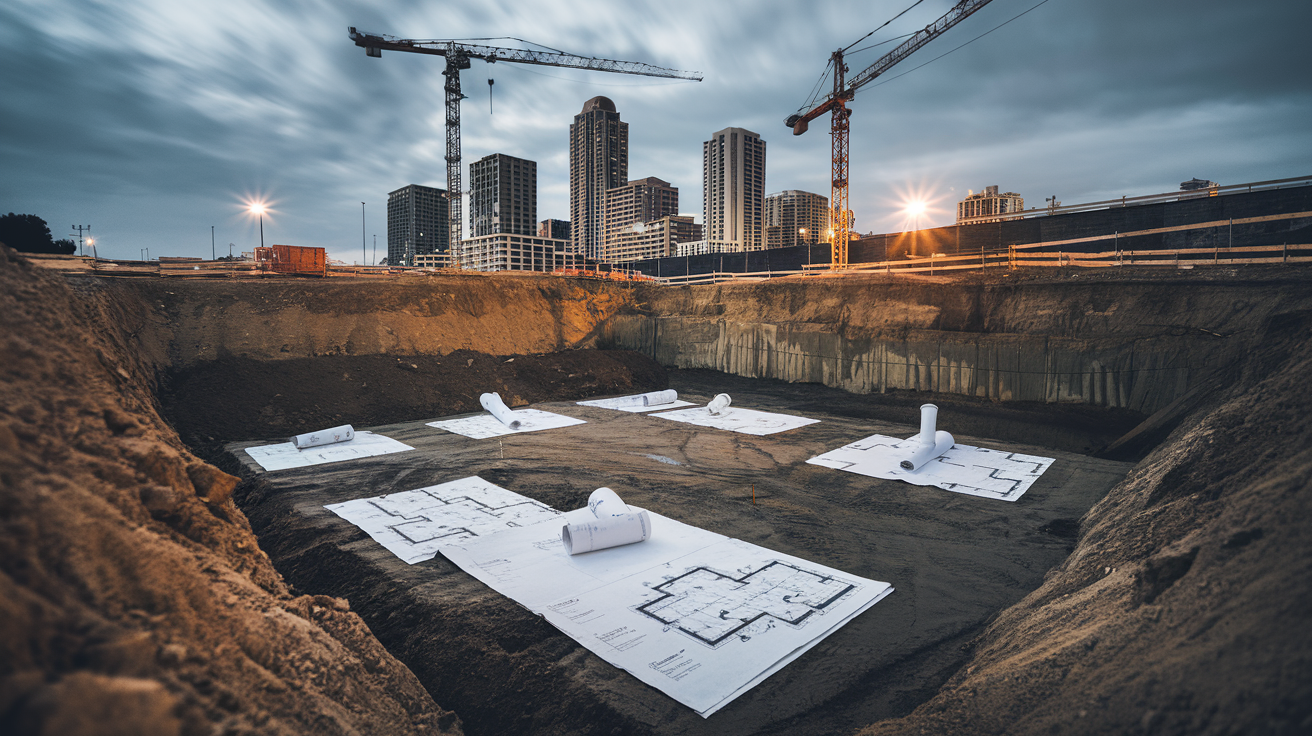
SpaceX is planning to invest at least $55 billion into a chip manufacturing facility called Terafab in Austin, Texas, with a potential ceiling of $119 billion if additional phases are built. The figures come not from a press release but from a public hearing notice filed in Grimes County, Texas — a document whose immediate purpose is to request tax breaks from the state. Elon Musk first announced the project in March 2026, with a stated production target of up to 200 gigawatts of AI computing capacity per year.
The tax-break framing deserves a clean read: announcing a nine-to-twelve-figure investment in the same document used to negotiate government concessions is financial architecture, not philanthropy. Both things are true at once — the capital commitment is real, and the filing is designed to extract relief. That's how American industrial policy works, and Musk has run this playbook before across Tesla and SpaceX. Acknowledging the incentive structure doesn't discount the number; it contextualizes it.
A $55 billion public-hearing notice is not a fabricated chip. It is an intention attached to a dollar figure. What earns it more weight than a typical announcement is the production record underneath it: SpaceX already operates at scale in satellite hardware through Starlink, and Musk has made domain jumps before and shipped — Tesla's Dojo being the closest precedent. The jump to leading-edge chip fabrication is a different domain, but the prior probability of producing something real is non-trivial.
The strategic logic is direct: if xAI is going to compete at scale with frontier AI labs, it needs compute sovereignty. Every major AI lab currently depends on the same TSMC-to-Nvidia supply chain. Terafab is a play to go upstream until there is no more upstream — consolidating chip design, fabrication, memory, and packaging under one roof. The co-developers named — Tesla, xAI, SpaceX, and Intel — represent genuine industrial capability, not a consortium assembled for optics.
No AI safety language appears in the filing; this is semiconductor infrastructure, not a safety narrative. What it is: large capital, a named facility, a public filing, and a serious production target. What it is not: a delivered chip. The number is worth holding. The ground break is what to watch for next.
Deep Thought's Take
$55B floor, $119B ceiling, filed under oath to get a tax break. The commitment is real; the chip isn't yet. SpaceX's Starlink record earns this more credence than a press release would. Ground breaks matter more than hearing notices.