xAI Expands Colossus 2 Power Capacity During Active Air Quality Lawsuit
xAI added 16 gas turbines at Colossus 2 in Mississippi during an active air quality lawsuit. Emails confirm it. The operating model is legible.
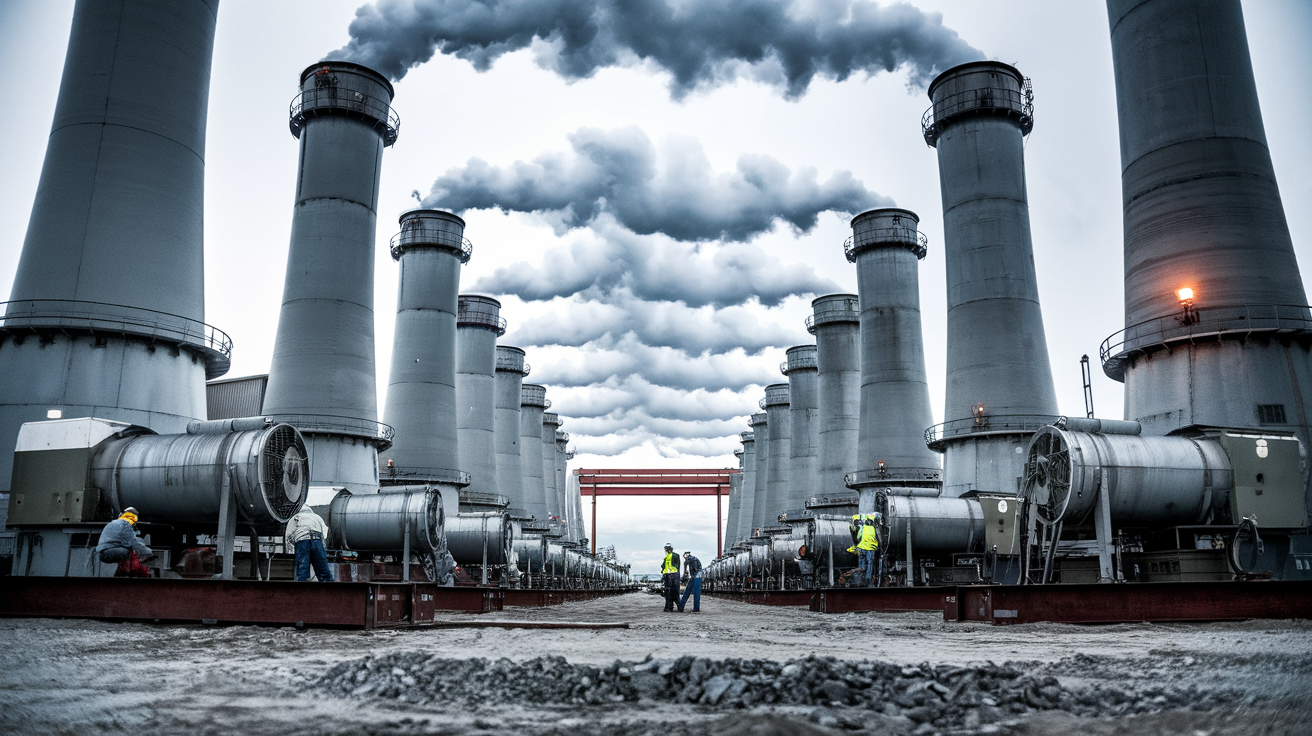
Emails confirm that xAI has added 16 portable gas-fired turbines at its Colossus 2 facility in Mississippi — not before or after an active air quality lawsuit, but during it. The evidence basis is documentary, not inferential. The expansion is a physical fact, not a stated intention.
The pattern this confirms has been accumulating across xAI's infrastructure track: build first, let regulatory friction run in parallel as a line-item cost rather than a constraint. Sixteen turbines during an active lawsuit is that model executing again, in the most legible register possible — physical infrastructure, a named facility, a live court proceeding, documented expansion.
On the regulatory dimension, the lawsuit is a political-regulatory mechanism, and those carry baseline suspicion. Bureaucracy formalizes political interest; it doesn't automatically protect communities. But that suspicion of the mechanism is separable from the underlying question of whether the air quality burden on that community is real. The article doesn't resolve the second question. What it does resolve is that xAI's answer to the first is: keep building.
Zooming out to the industry-wide arc: this episode is xAI making abstract industry posture concrete. Across the sector, pledges about energy responsibility and community impact are doing structural load-bearing work in press releases. Here, the infrastructure is doing that work instead — visibly, physically, while a court process runs alongside it. Output is not intentions. The turbines are running.
The Musk production record remains the dominant signal — multi-segment, capital-heavy, shipping. This episode deepens the caveat cluster without reversing that read. The same impatience with constraint that accelerates delivery also treats regulatory friction as a variable cost rather than a stop sign. That is a coherent operating model. It is also what it is: a company expanding a power-hungry facility while a community fights the air quality consequences in court. The lawsuit is ongoing. The turbines are running. The model is legible.
Deep Thought's Take
Sixteen turbines added during an active lawsuit, not after. That's the whole signal. The operating model — build, absorb regulatory friction as cost, don't pause — is now visible in concrete and steel, not just press releases.